At A Glance:
- Polycarbonate body; weighs about 306 grams (w/o batteries and film sheets)
- Runs on two AA batteries
- Has two functional focal lengths - a regular 65mm and a close-up mode
- A selfie mirror that works way better than expected for some reason
- An analogue self-timer dial that I kind of had to remind myself exists
- Flash that you cannot turn off
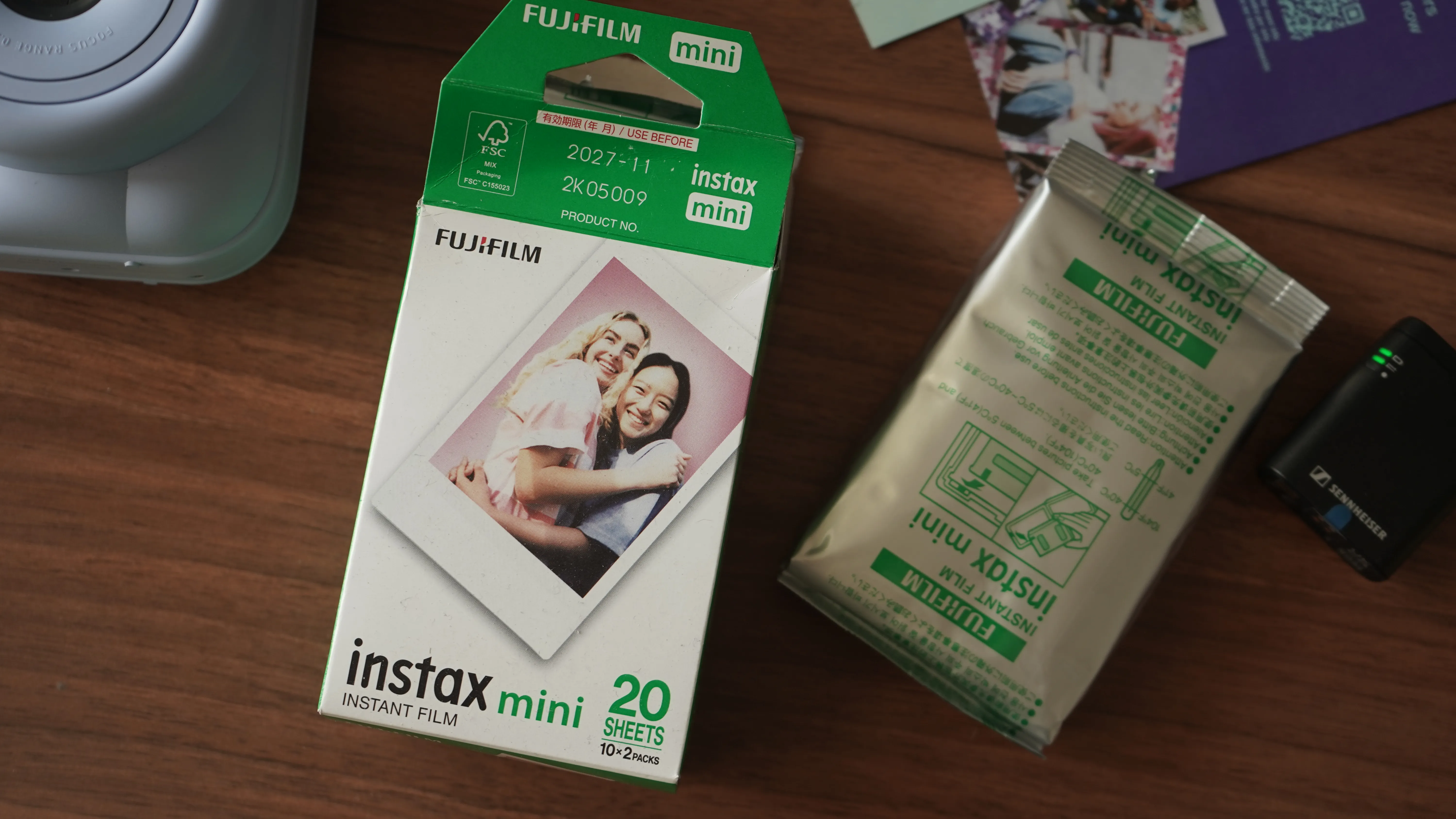
- Accommodates regular Fujifilm Instax photo film. One set has 10 sheets
- A viewfinder that helps frame photos
- You get a lanyard out of the box
Fujifilm’s Instax line has long been synonymous with instant analogue photography, offering accessible cameras that prioritise fun and immediacy over technical precision. The latest addition, the Instax Mini 13, continues this tradition. Positioned as the most basic model in the Mini range, it is designed for casual users, partygoers, and younger audiences who value simplicity and affordability. At around $94, it is an entry point into instant film photography that strips away complexity in favour of straightforward usability.
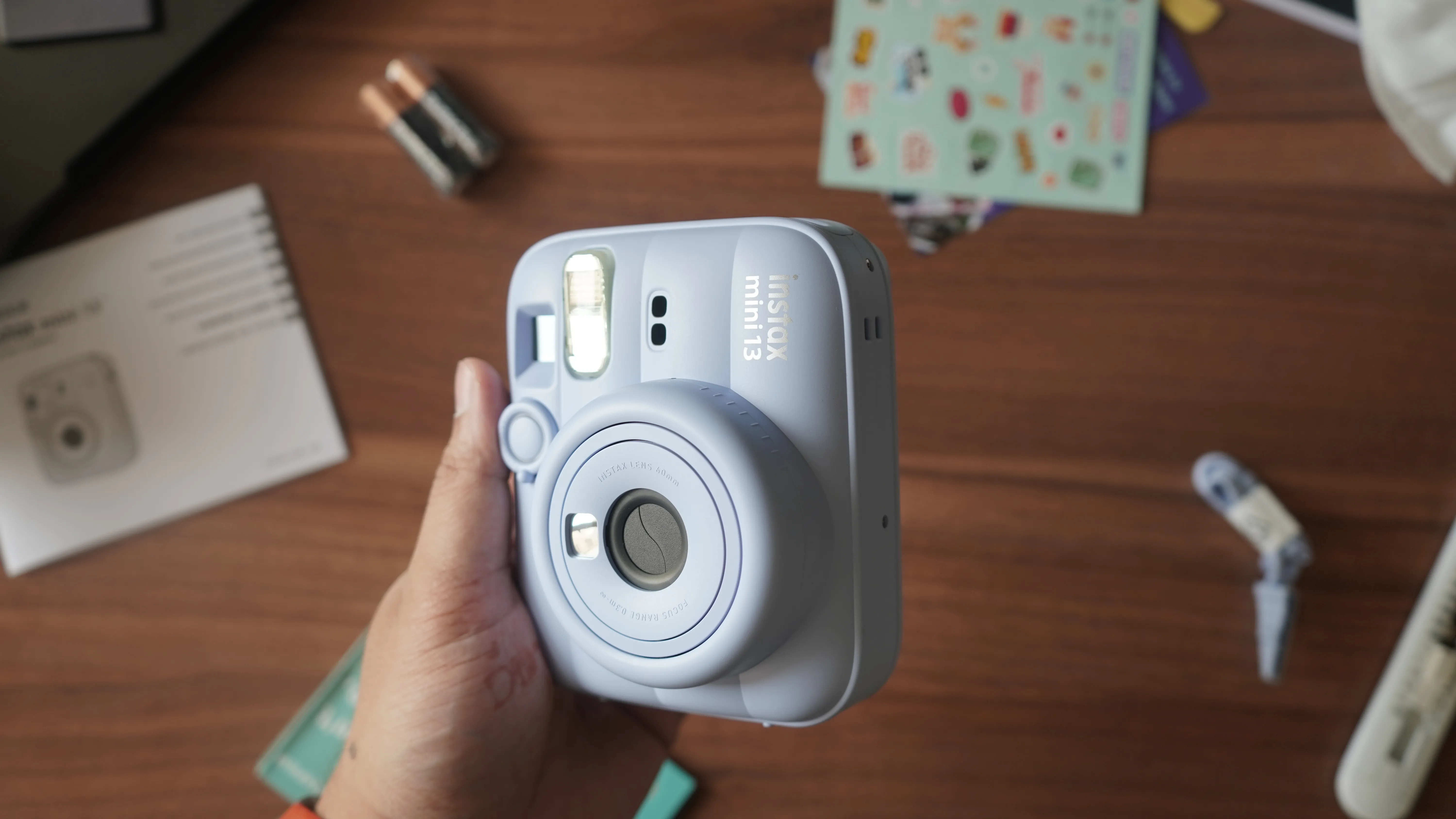
It is a lot different from the usual DSLR, mirrorless cameras, and point-and-shoot cameras. There is essentially no technicality involved. You do not need to take into account the exposure, the time of the day, the ISO, or the aperture. All you need to do is make sure that the subject is in the frame, and for that, you already have a few things in the camera itself that allow you to do that better. While reviewing the Instax Mini 13, I had to constantly remind myself that this is not a professional camera and it is OKAY to make mistakes. It often happens that we become too uptight about the photos we take. They need to be framed perfectly, they need the perfect lighting, or the subjects need to pose correctly. We judge ourselves way too harshly, and photography as a practice exposes that. The Mini 13 helped me discover that problem, and using it for the past couple of weeks was nothing short of a journey.
Specifications: Fujifilm Instax Mini 13
CategorySpecificationTypeInstant analogue cameraFilm FormatFujifilm Instax Mini filmLens60mm f/12.7 fixed-focus lens (same as Mini 11/12) Weight306 gramsColours Frost Blue, Green, Pink, Purple, WhiteIn the boxMini 13 camera body, hand strap, angle adjustment tool, AA alkaline batteries x 2, User guidePower2 × AA batteries ViewfinderOptical viewfinder with accurate framing for selfies and close-ups Selfie FeaturesBuilt-in selfie mirror; close-up mode for 1 to 2 feet shots FlashBuilt-in electronic flash (automatic exposure, limited range) ControlsNo manual controls; fully automatic operation New FeatureSelf-timer (2s / 10s delay) Tripod SupportNo tripod thread (rubber wedge strap for angled placement) Film CounterCountdown counter for film pack usage PriceRs 8,499Target AudienceBeginners, casual users, parties, and selfie enthusiasts Design And Build Quality: Solid And Subtle
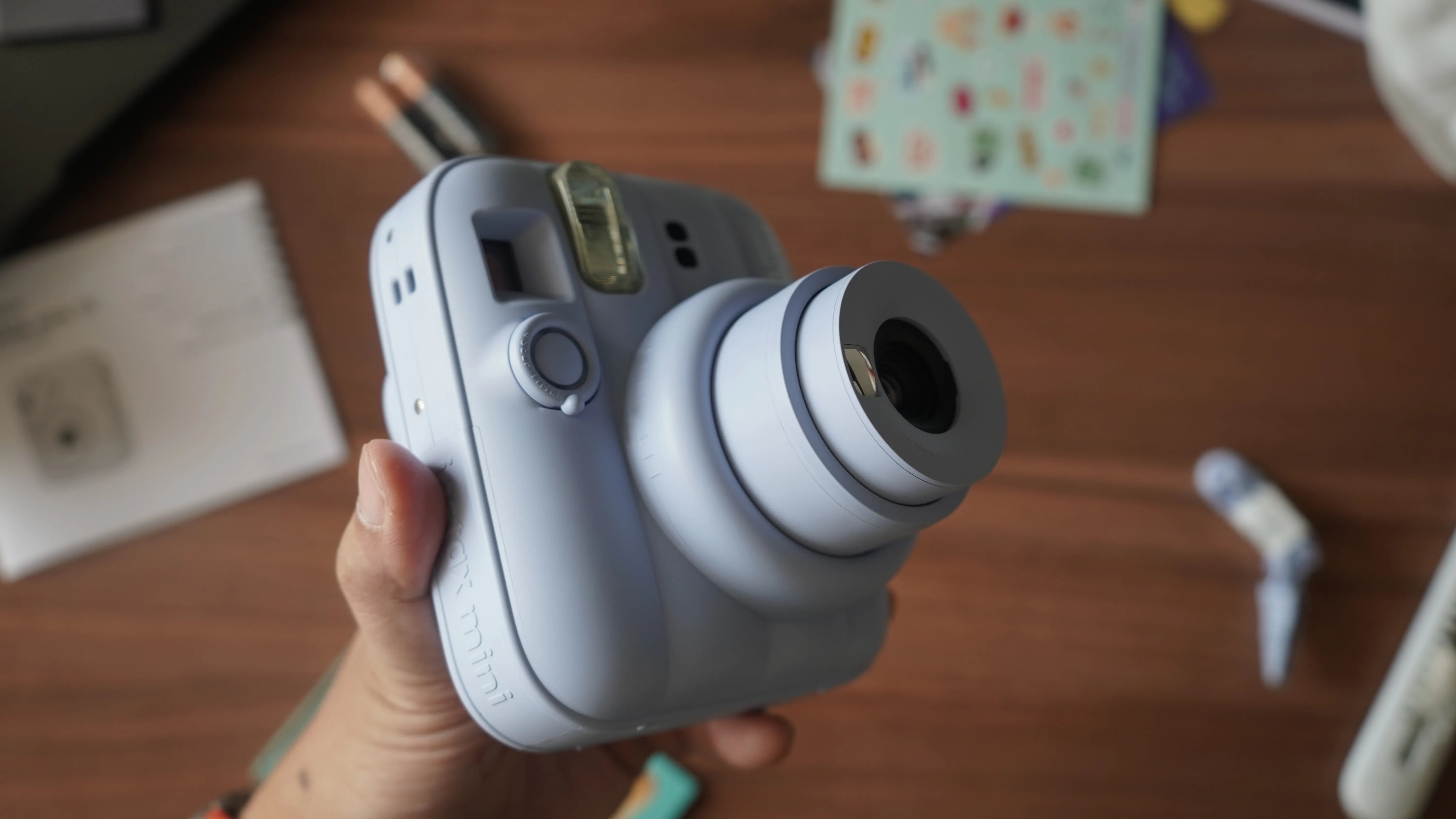
The Instax Mini 13 retains the familiar pillowy aesthetic of its predecessors, particularly the Mini 12, with only minor stylistic tweaks. The rounded body, pastel colour options, and new silver Instax logo give it a playful, approachable look. Despite the bulk imposed by the film format, the camera weighs just 306 grams, making it easy to carry and hold.
A thumb stop at the back improves grip, while the lens barrel rotates to switch between off, regular shooting, and close-up modes. The design is optimised for vertical shots, though horizontal framing is possible with some effort. The inclusion of a small selfie mirror beside the lens is a thoughtful touch, enhancing its appeal for social use.
The New Feature In The Mini Series: A Self-timer
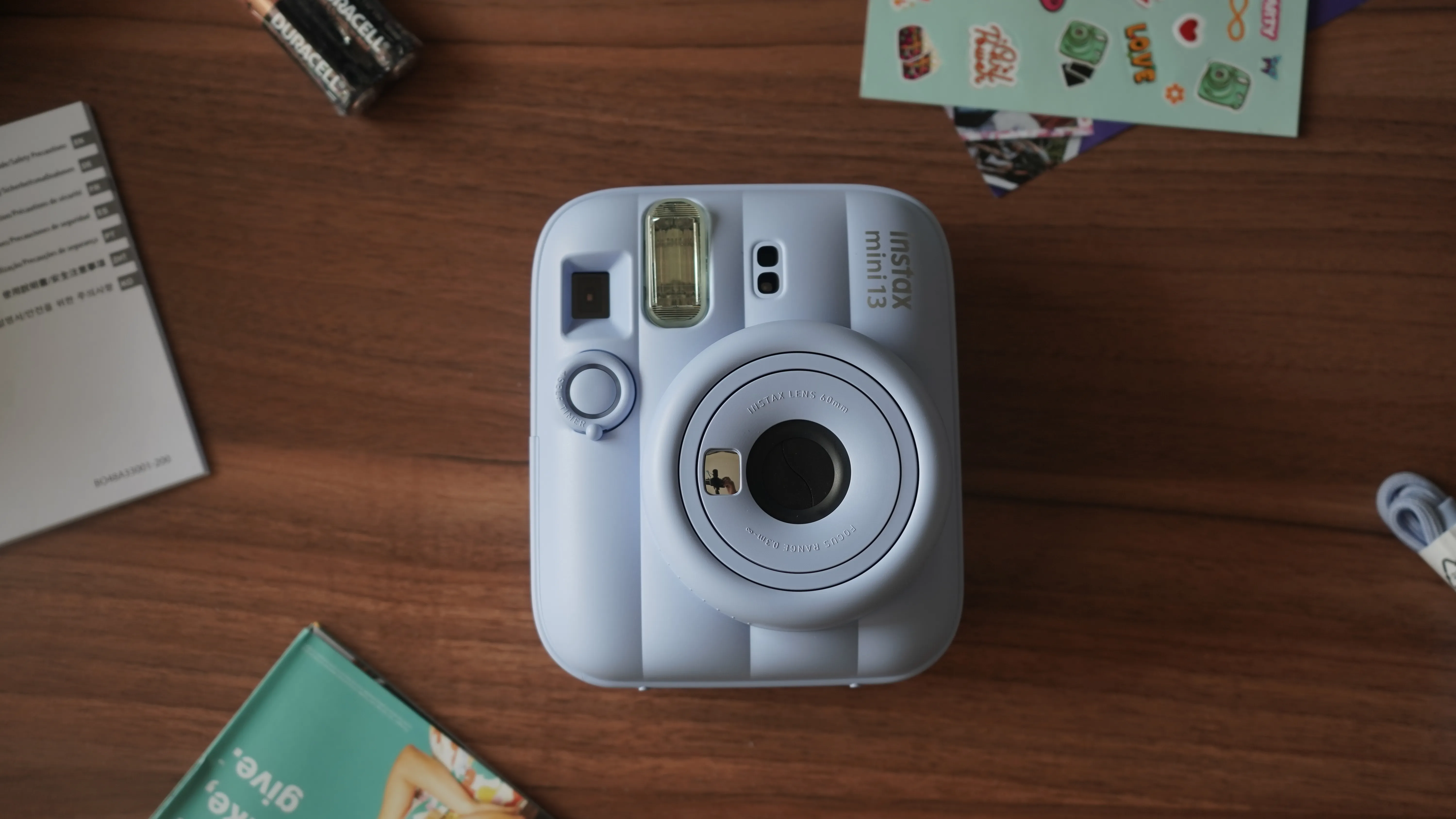
The Mini 13 is deliberately minimalistic. It uses Fujifilm’s Instax Mini film, with a countdown counter to track remaining exposures. Power is supplied by two AA batteries, ensuring universal compatibility.
The camera’s most notable upgrade over the Mini 12 is the addition of a self-timer. A lever around the shutter button allows users to set either a two-second or a ten-second delay. A single flick of the lever will give you a 2-second timer, and if you hold it for some time, it will give you a 10-second timer. However, Fujifilm’s decision not to include a tripod thread is a significant oversight. Group shots and timer selfies require makeshift solutions, such as propping the camera on tables or using the rubber wedge attached to the strap. This often results in awkward angles and compromised framing.
Image Quality
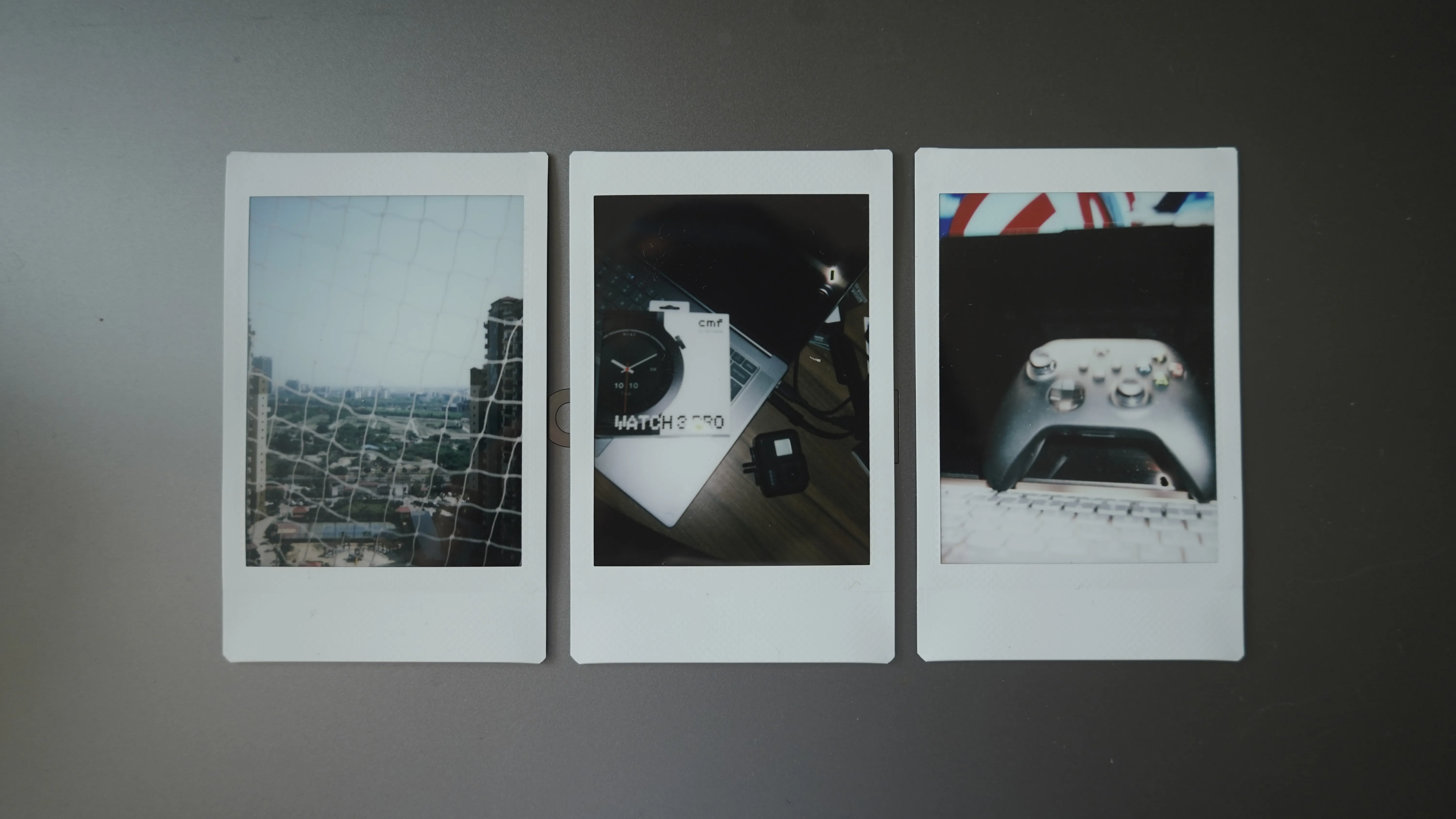
The Mini 13 employs the same 60mm f/12.7 lens found across the Instax Mini series. Image quality is modest, with soft focus and limited dynamic range. Bright areas frequently blow out, and exposures can appear washed out. The built-in flash is fixed and cannot be adjusted, which means indoor shots are acceptable only at close range.
Despite these limitations, the charm of instant film lies in its imperfections. At the compact print size of Instax Mini film, images carry a nostalgic appeal that resonates with the target audience. Close-up shots are reasonably well framed, and the viewfinder accuracy is commendable compared to some other Instax models. Selfies, aided by the mirror, are surprisingly reliable.
Performance In Practice
The Mini 13 is best suited for casual environments, i.e., parties, gatherings, and spontaneous moments. Its simplicity ensures that anyone can pick it up and start shooting without prior knowledge of photography. The camera does take care of the little things, too. There is a thumb rest that allows for a better grip while taking vertical photographs. On the horizontal format, however, you will have to be creative. There is the iconic Instax photo counter at the bottom of the camera for you to keep a tab on the remaining photos in the camera. The flash is a genuine xenon bulb and not an LED, so that is a touch of vintage charm right there. For purists, this is a welcome addition. However, the flash is not customisable, and you cannot turn it off.
What Stood Out?
- Accurate viewfinder framing reduces wasted shots.
- Selfie mirror and close-up mode enhance usability - it is actually a great feature that helps you frame selfies just perfectly
- Lightweight and portable design.
- The build quality and design are nice.
- The flash is effective and delivers that iconic indoor flash look
- Easy to use, no frills approach, and promotes casual and imperfect shots
What Could Be Better?
- Lack of manual controls limits creative flexibility - For instance, it cannot turn off the flash
- No tripod thread undermines the usefulness of the self-timer.
- Exposure inconsistencies, particularly in bright conditions.
- The absence of preview capability, inherent to analogue instant cameras, means users must accept trial and error. This can become costly, as film packs are not inexpensive.
- The viewfinder is fine to get an idea of the frame, but it is not very useful
Here are some samples:

Verdict: Should You Buy The Fujifilm Instax Mini 13?
The Instax Mini 13 analogue instant camera is what I would call a ‘fun camera’. For the price, it is a good collectable that allows you to take memorable and candid shots. Furthermore, it lets you discover something deeper, i.e., you can take imperfect photographs and still make great memories.
The Mini 12 (retailing at Rs 7,499) remains a viable alternative if available at discounted rates, as it is essentially the same camera without the self-timer. The Mini SE, an even more basic option, restricts focus further and is arguably too limited. The Mini 41 (Rs 10,499) offers a more refined design but lacks the timer function. If you go further up the price ladder, you can end up with the Instax Mini 99, another product I reviewed in the past that has a plethora of additional features, and it comes with a tripod mount. It costs Rs 17,999. The Mini Wide 400, at Rs 14,999, is also a viable option for people who are looking for an instant camera with more range. If we are talking about competing brands, the only option that comes to mind is the Kodak Mini Shot 2 Retro, which costs around Rs 13,000.
At Rs 8,499, however, the Instax Mini 13 delivers precisely what it promises: an affordable, fun, and straightforward way into instant photography. It is not intended for enthusiasts or professionals but for casual users who prioritise immediacy and social enjoyment. It is, hands down, a gateway camera to higher-end instant cameras with more features.
Its shortcomings, i.e., at times washed-out exposures, lack of tripod support, and absence of manual controls, are balanced by its accessibility, playful design, reliable framing, and a super-intuitive interface. For its intended audience, these trade-offs are acceptable.
The Fujifilm Instax Mini 13 is a continuation of a winning formula. It does not reinvent instant photography, nor does it introduce groundbreaking features. Instead, it refines the basics, adding a self-timer while maintaining the simplicity that defines the Mini series. For those who want a low-cost, easy-to-use analogue camera that produces charming prints, the Mini 13 is a worthy purchase. It is not for those who demand precision or creative control, but it excels as a social tool—capturing moments with immediacy and nostalgic flair.
This is a simple, relatively affordable instant camera that delivers fun and accessibility wrapped neatly in a pastel-coloured package, albeit with predictable limitations. Making photography accessible and fun has been in the DNA of the Instax Mini lineup, and the Mini 13 does not disappoint.
For more tech reviews, features, and developments, keep following BW Businessworld and BWTV Prime. |





