The transition Apple announced on Monday, 20 April 2026, represents a structural docking sequence fifteen years in the making. While global news cycles focused on the "Cook out, Ternus in" narrative, the actual mechanics revealed a far more complex reconfiguration. Apple has returned to the organisational architecture first envisioned by Steve Jobs in 2011. By promoting John Ternus (50) to CEO and transitioning Tim Cook (65) to Executive Chairman, the Board has formalised a leadership model where product execution sits with the engineer and global statecraft remains with the diplomat. Cook justified the timing in his internal memo to staff, noting that "today, we have a truly extraordinary road map," which makes this the ideal moment for a changing of the guard. The timing carries heavy significance: Ternus assumes command on 1 September, exactly seven days before Apple’s fabled September event — the most ambitious product launch in the company’s history.
The Friday Parc Fermé And The Silent Handover
In the high-stakes discipline of Formula 1, parc fermé denotes the moment a car enters a restricted state where further mechanical adjustments remain forbidden before the race begins. Apple’s leadership transition entered its own parc fermé on Friday, 17 April 2026. While the global media prepared for a routine Monday announcement, the Board of Directors had already frozen the strategy in a closed-door session. The decision was unanimous, a clinical execution of a long-term plan that survived through fifteen years of growth and two global crises. Cook reflected on the gravity of his tenure in the public announcement, stating, "It has been the greatest privilege of my life to be the CEO of Apple."
The clinical discipline of this timing is absolute. Only three weeks prior, Tim Cook sat for an interview with Good Morning America, explicitly dismissing retirement talk as a mere rumour and professing his deep affection for the daily work at Cupertino. That denial, viewed through the lens of the 20 April announcement, served as a strategic decoy — a necessary piece of misdirection to prevent a "lame duck" period for the sitting CEO. Apple required the transition to land with the force of a product reveal rather than a corporate restructuring. Cook echoed this emotional depth in his community letter, writing, "I love Apple with all of my being," signaling that his transition to Executive Chairman remains a move of passion rather than fatigue.
Yet, for those monitoring the telemetry, the signals were audible. In his 50th-anniversary interview with Esquire, Cook had already begun to frame his legacy through the philosophy of engagement, noting that "the Trump administration is very accessible." That interview’s closing sentiment — that Apple’s values exceed any single individual — acted as a dress rehearsal for his community letter released this Monday. The "slow-motion handover" remained hidden in plain sight, a transition designed to appear as a sudden event while functioning like a long-planned Starfleet command succession. When the announcement hit the wires at 1:30 PM PT, the car already sat on the starting grid; the race was already won.
The Command Structure: Sunday To Monday
The operational details of the announcement reveal a company obsessed with the optics of continuity. Tim Cook’s tenure as Chief Executive Officer concludes at midnight on Sunday, 31 August 2026. John Ternus steps onto the bridge as Apple’s eighth CEO on Monday, 1 September. This transition happens while American offices stay empty for the Labor Day holiday, ensuring a quiet administrative shift before the markets react on Tuesday. Ternus acknowledged the weight of the moment in his public statement, saying, "I am profoundly grateful for this opportunity to carry Apple's mission forward."
This Executive Chairman (EC) and CEO structure aligns Apple with the elite governance models of its peers. It mirrors the arrangement at Microsoft, where Brad Smith functions as Vice Chairman and President, acting as the primary diplomat for government relations while Satya Nadella runs the machine. It echoes the Eric Schmidt era at Google and Alphabet, where Schmidt provided the external "adult supervision" for Larry Page and Sundar Pichai. Even Amazon adopted this blueprint when Jeff Bezos transitioned to EC, handing the reigns to Andy Jassy to operate as CEO. At Apple, Cook becomes the permanent Chief Diplomat, freeing Ternus to focus entirely on the physics of the next decade's hardware. Cook confirmed this supportive role in his employee memo, noting, "I plan to support John and Apple in a number of key areas."
The Board’s unanimous approval of this structure reflects a desire for stability during the most volatile period in consumer electronics history. As part of this reshuffle, Arthur D. Levinson, who has served as non-executive chairman for fifteen years, transitions to an independent board member on 1 September. Cook was quick to acknowledge this shift, writing, "I want to thank Art for the incredible work he has done." This movement, occurring even as Levinson reaches 75, suggests Tim Cook possesses a runway as Executive Chairman that could span a decade or longer. Apple is building a dual-leadership model designed for endurance rather than just transition.
The Docking Sequence Vindicated: Returns To 2011
BW Businessworld argued in January that Apple’s CEO succession was a spacecraft docking sequence with redundancies stacked upon redundancies. Monday’s announcement served as the final mechanical lock, but it also fulfilled a historical mandate. This was the original plan for Apple in August 2011. When Steve Jobs resigned as CEO, he became Executive Chairman, intended to serve as the mentor and chief visionary while Cook ran the company. Jobs even spent those final weeks pitching the Cupertino City Council on the construction of Apple Park. His death in October 2011, one day after the launch of the iPhone 4s, forced an immediate deviation from that plan, resulting in Arthur Levinson being named non-executive chairman. Today’s move restores that interrupted architecture. Ternus touched upon this heritage in his press release, stating, "Having spent almost my entire career at Apple, I have been lucky to have worked under Steve Jobs."
The retirements of the last eighteen months prepared the site for this restoration. Dan Riccio departed in October 2024. Jeff Williams, once considered a front-runner, transitioned the COO role to Sabih Khan in July 2025 before retiring in November. Alan Dye left for Meta in late 2025, while Lisa Jackson and Kate Adams phased out their roles shortly after. Each departure removed a potential rival, leaving the bridge clear for Ternus. John Ternus has spent 25 years at Apple, earning the trust of both Jobs and Cook. His tenure spans from the Apple Cinema Display to the Vision Pro, representing the entire modern hardware arc. Monday was merely the moment the hatch opened.
Why Ternus Is The Right Pick: The Engineering-CEO
Wall Street analysts, led by Patrick Moorhead, call Ternus the "continuity candidate" — a safe, risk-averse choice. This reading remains superficial. Ternus is a specific pick. He is the first engineer since Steve Jobs to lead the company, and his "product religion" is built into his DNA. He graduated as a mechanical engineer from the University of Pennsylvania, where he also competed as a varsity swimmer — a discipline that rewards endurance and precision. His early career at Virtual Research Systems focused on advanced virtual reality, a background that proved vital for shepherding the Vision Pro. Cook highlighted this unique profile in the public release, writing that "John Ternus has the mind of an engineer, the soul of an innovator."
The story that defines him inside Cupertino is the "screw groove" incident. Ternus once held up a production line because a supplier’s screw had 35 grooves instead of the 25 Apple had specified. To Ternus, those ten grooves were the difference between excellence and compromise. This willingness to protect "the product religion" at the most granular level makes him the ideal choice for a hardware-led decade. Ternus managed the transition to Apple silicon for the Mac, working in a symbiotic relationship with Craig Federighi. In his internal memo, he promised, "I still plan to be very hands-on," a signature construction that identifies him as a leader who remains deep in the technical weeds.
The September Stakes: 2nm, Foldables, And Gemini Siri
Ternus takes the reins just as Apple enters its most consequential month. One week after he becomes CEO, the world will watch the September 2026 event. Expectations remain astronomical. This year, Apple plans to unveil the iPhone Ultra, its inaugural foldable smartphone. Rumoured to feature a 7.8-inch internal display and a liquid metal hinge mechanism, the Ultra aims to eradicate the perceptible crease that has dogged competitors. This device represents the single largest form-factor shift since the original iPhone in 2007. Ternus, the man who spent a decade solving hinge and thermal problems, now owns the success of this category entry. Arthur Levinson’s public verdict anchors this transition: "John is the best possible leader to succeed Tim."
Alongside the foldable, the iPhone 18 Pro models will introduce the industry’s first 2nm chipset. Built on TSMC’s most advanced process, the A20 Pro chip promises a 30 per cent improvement in energy efficiency and a 15 per cent boost in CPU performance. These devices will also be the first to feature true Apple Intelligence, anchored by a rearchitected Siri. This new Siri runs on Google’s Gemini technology, part of a $1 billion annual deal that licenses a 1.2 trillion parameter model. This partnership serves as a bridge while Apple builds its own internal AI server capability, Baltra. The September event will be the first public test of whether an engineer-CEO can deliver on the AI promise that has recently made Apple appear late.
Tim Cook: The Permanent Chief Diplomat
The most significant detail of the April 20 announcement is the fine print regarding Cook’s mandate. He is now Apple’s permanent Chief Diplomat. Cook’s mandate as Executive Chairman is explicitly to assist with "certain aspects of the company, including engaging with policymakers around the world." This is the role Cook has mastered, acting as the interface for heads of state, regulators, and government officials across Washington, New Delhi, and Beijing. As Wedbush’s Dan Ives noted, Cook has functioned as a "10 per cent politician" for years. Now, that diplomacy becomes his primary contribution. Cook framed this broader perspective in his community letter, writing, "I feel the beating heart of our shared humanity."
John Ternus has a documented footprint of zero in global statecraft. He has no recorded meetings with Prime Minister Modi and no history of navigating the US-China trade corridor. Cook, by contrast, possesses the relationship capital required to navigate the EU’s Digital Markets Act and the US Department of Justice antitrust case. He managed to minimise tariffs during the Trump administration by promising $600 billion in US investment and shifting production to India. Cook’s community letter stated, "This is not goodbye," a signal that he remains the permanent ambassador. This ensures that while Ternus solves engineering problems, the political load remains with the man who can walk into any Prime Minister's Office as the leader of a sovereign entity.
The Srouji Elevation Is The Real Story
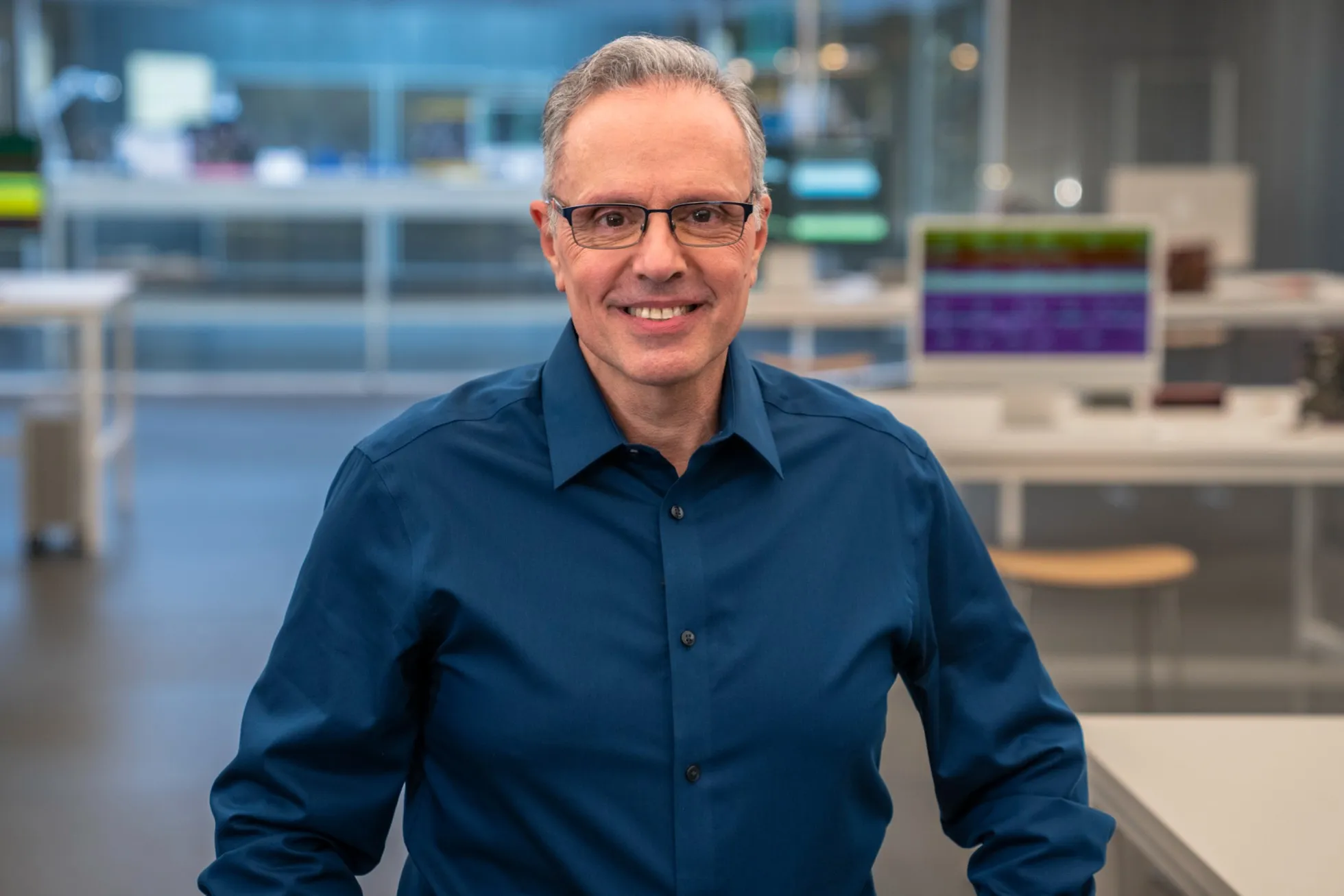
Three months ago, BW Businessworld argued that Johny Srouji was Apple’s most consequential executive — more important than Cook or Ternus — because the company’s future is gated by the physics Srouji engineers. Today, Apple validated that thesis by inventing a title for him: Chief Hardware Officer. Srouji now oversees both Hardware Technologies and Hardware Engineering, placing him structurally closer to the CEO than any hardware leader in history. Cook’s separate press release on Srouji was emphatic: "Johny is one of the most talented people I have ever" had the privilege to work with.
Srouji’s silicon empire — from the A4 to the M5 — remains the bedrock of Apple's competitive advantage. By promoting him to CHO, Apple has created a dual-leadership structure at the top of the hardware stack: Ternus the engineer-CEO and Srouji the silicon-CHO. Ternus’s own quote called Srouji "an incredible partner on the executive team." It signals a partnership of equals. Srouji’s 2025 internal memo — "I don't plan on leaving anytime soon" — now stands as the prophecy of the leadership that will define the next decade. The Intel-to-Apple senior engineering pipeline now has two of its most consequential members running the hardware future, as Tom Marieb also assumes the head of Hardware Engineering reporting to Srouji.
What Ternus Inherits: The Rs 34.5 Lakh Crore Machine
The machine Ternus assumes on 1 September operates at a scale that defies traditional corporate metrics. Apple closed Monday in the USD 4 trillion market cap zone — a 1,000 per cent appreciation during Cook’s 15-year tenure. FY2025 revenue reached USD 416 billion (approx. Rs 34.5 lakh crore), and the active device installed base has crossed 2.5 billion. The Services business alone generates over USD 100 billion annually, a standalone entity the size of a Fortune 40 company. Levinson summarized the era by noting, "Tim's unprecedented and outstanding leadership has transformed Apple."
USD 4 trillion
Apple's market capitalisation at the April 20 announcement, a 1,000 per cent appreciation during Tim Cook's tenure.
Ternus inherits a product roadmap telegraphed across the last eighteen months. Beyond the iPhone Fold and the 2nm chipset transition, the N401 smart glasses programme remains the next visible hardware category. Prototypes across four frame designs are currently in testing, with production targeted for December 2026. The Siri LLM overhaul, repeatedly delayed and now reportedly running on Google's Gemini, will be Ternus’s first public test. He must scale a Services business whose pricing and content spend decisions require judgment that sits outside his engineering training, including a $30 billion content investment in Apple TV+ with limited commercial hit velocity. Ternus remains mindful of his mentors, stating, "I have been lucky to have had Tim Cook as my mentor."
The Tang Tan Shadow And The Regulatory Load
Ternus assumes office facing the first credible post-iPhone hardware challenger. Tang Tan, a former VP under Ternus, joined Jony Ive at LoveFrom in 2023. In May 2025, OpenAI announced an all-equity acquisition of Ive’s startup, io Products, for approximately USD 6.5 billion. Tan is now recruiting hardware engineers from Ternus’s former team. The competitive challenge is a new hardware category powered by the AI company that has made Apple appear late. Ternus must prove that Apple can out-innovate the industrial designer who defined its aesthetic and the engineering leader who ran its execution.
Beyond this, Ternus faces a regulatory load that is now global: the EU’s Digital Markets Act, India’s CCI App Store case, and the US DOJ litigation. Each jurisdiction applies different standards of market dominance, testing Apple's ecosystem defences simultaneously. He also inherits the relationship with Greg Abel at Berkshire Hathaway, who now manages the USD 62 billion Apple stake. Cook’s diplomatic cover in the Executive Chairman role buys Ternus time to learn the cadence of institutional investor relationships, another structural reason the Executive Chairman retention matters. Cook wrote in his employee memo, "John is the right leader to help us innovate."
The India Question: The Unanswered One
India was Tim Cook’s personal file for a decade. Under his watch, India manufacturing grew to 25 per cent of global iPhone output, representing USD 40 billion in annual production. Revenue crossed USD 10 billion, and Apple's premium segment share reached 21 per cent according to Counterpoint Research. Yet, John Ternus has a documented India footprint of zero. He has no recorded visits and no public interaction with the PLI manufacturing architects. Continuity is preserved through Sabih Khan (COO), but the diplomatic vacuum is real.
The CCI App Store case, with final hearings in May 2026, represents a live regulatory risk Ternus inherits without Cook’s relationship capital. The structural question is whether Ternus develops an India file of his own, or whether Cook handles the "Modi relationship" indefinitely from the Chairman’s seat. Two elements remain unresolved: the Siri LLM transition's Indic capability and the CCI outcome. India’s Apple relationship has operated on a single-executive model for fifteen years. The Monday announcement did not end that model; it preserved it through Cook's new role. Cook reminded staff in his memo, "What we built, we built together."
The Handover: "Make It So"
In July 2012, John Ternus was granted US Patent 8,230,553 for a hinge mechanism. It was a solution for a mechanical problem involving structural integrity across repeated cycles of use. Today, Ternus is the solution for a leadership problem involving the structural integrity of the world’s most valuable company. The engineer who spent a decade solving hinge, display thermal, and materials-compound problems now inherits the hardest hardware problem in technology: what Apple becomes when Tim Cook stops running it.
The Captain has been promoted. Tim Cook’s final day is Sunday, 31 August. On Monday morning, 1 September, John Ternus will step onto the bridge. The American offices will stay empty, the markets will stay closed, and the transition will be a quiet, engineered reality. Srouji’s December memo — "I don't plan on leaving anytime soon" — now reads as the prophecy of the leadership that will define the next decade. The engineering frame fits the moment. Make it so.
ExecutiveNew Role (Effective 1 Sept 2026)John TernusChief Executive Officer & Board MemberTim CookExecutive ChairmanJohny SroujiChief Hardware Officer (Effective Immediately)Arthur D. LevinsonLead Independent DirectorTom MariebHead of Hardware Engineering (Effective Immediately) |





