Canon just dropped the curtains on the new EOS R6 V, a camera that essentially takes the well-loved R6 lineage and asks: what if we built this almost entirely around video? Having spent time with the camera during the unveiling, here is a hands-on review.
First Impressions: Lighter Than It Looks
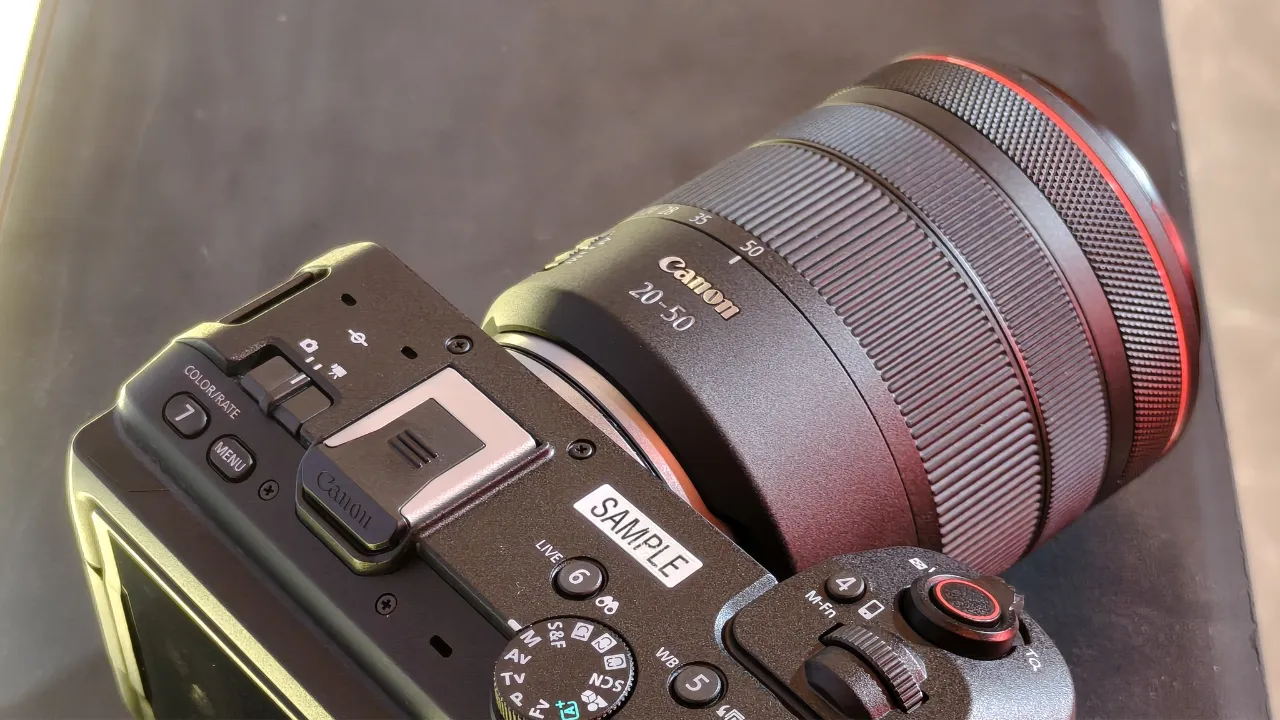
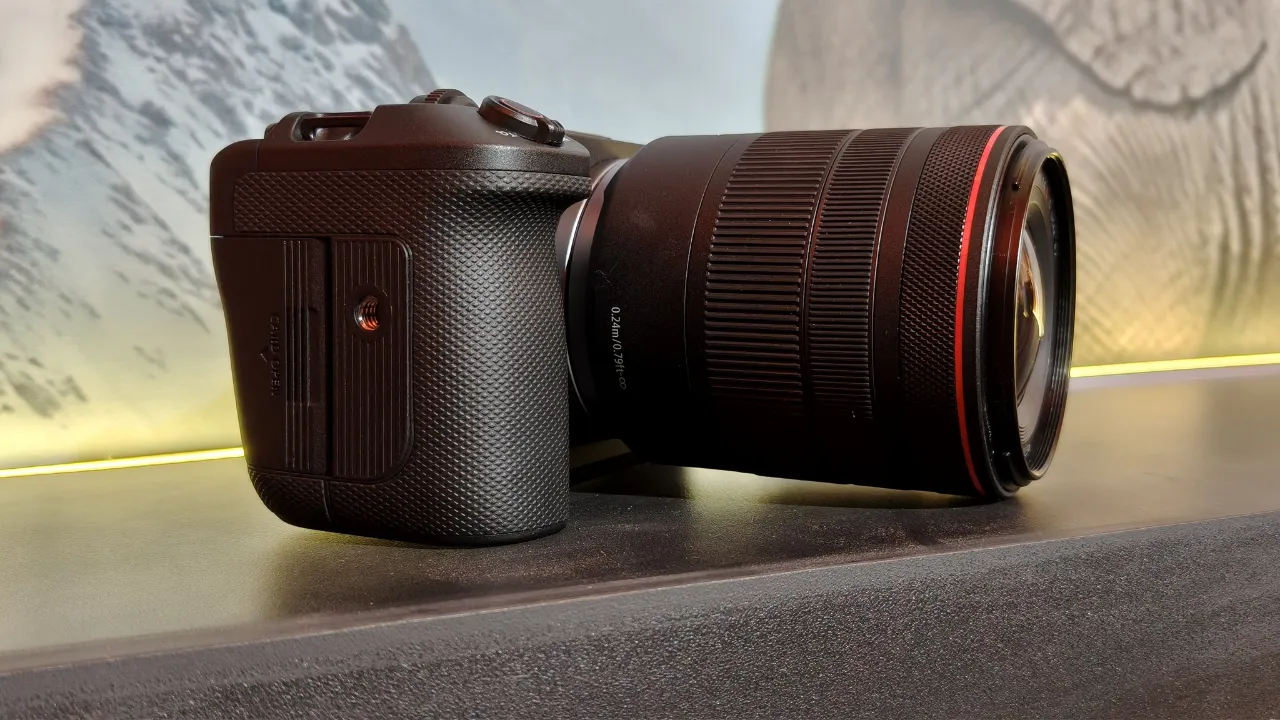
Pick up the R6 V and the first thing that strikes you is the weight, or rather, the surprising lack of it. For a camera packing this level of hardware, including a full-frame sensor, an active cooling system, and a professional-grade video engine, it is shockingly light. Far lighter than you would expect, holding it for the first time. The magnesium alloy body is solid and reassuringly durable, with a rigidity that communicates quality without adding unnecessary heft. This is a body you can carry on a shoulder rig for hours without your arms filing a formal complaint.
The build quality feels premium throughout. Seams are tight, the grip is deep and textured, and the overall form factor will feel immediately familiar to anyone who has used an R-series body before. Canon has not reinvented the chassis here, and that is the right call.
One small detail that made me genuinely happy: there is another dedicated ‘Record button’ positioned at the bottom right corner of the camera body. It is a minor thing, perhaps, but for a camera so thoroughly oriented around video, having that button right where your thumb naturally rests just feels right. It is the kind of thoughtful ergonomic placement that tells you this was designed by people who actually shoot video.
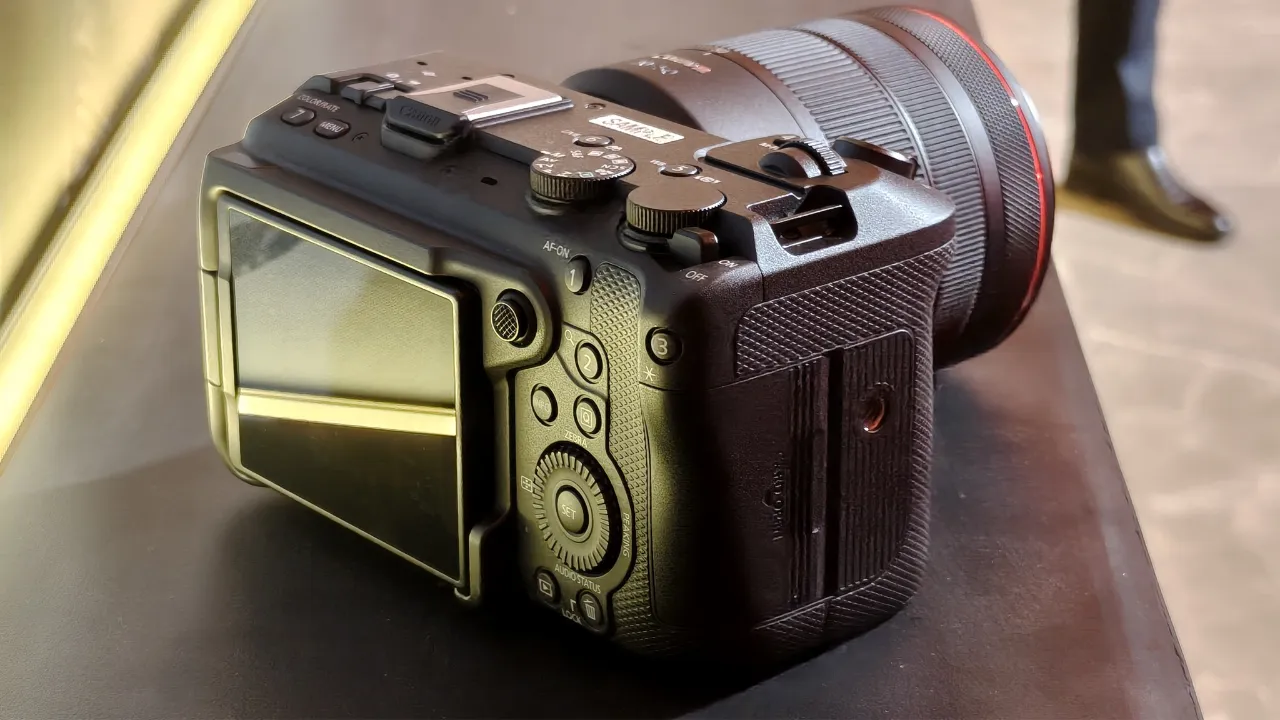
One caveat worth flagging for newer users: the button layout is dense. The number of physical controls on this body can feel a bit overwhelming at first. There are dedicated buttons for colour profiles, video recording, AF modes, and more, all layered across the top plate and rear panel. Once you learn the layout, it becomes intuitive, but the initial learning curve is real, especially for people who are not familiar with the Canon UI.
There is also no electronic viewfinder on the R6 V, which will matter to some users. Canon has clearly made a deliberate choice here, betting that the target audience, working videographers and content creators, will prioritise the screen over an EVF.
The Screen: Wide, Articulated, And Genuinely Useful
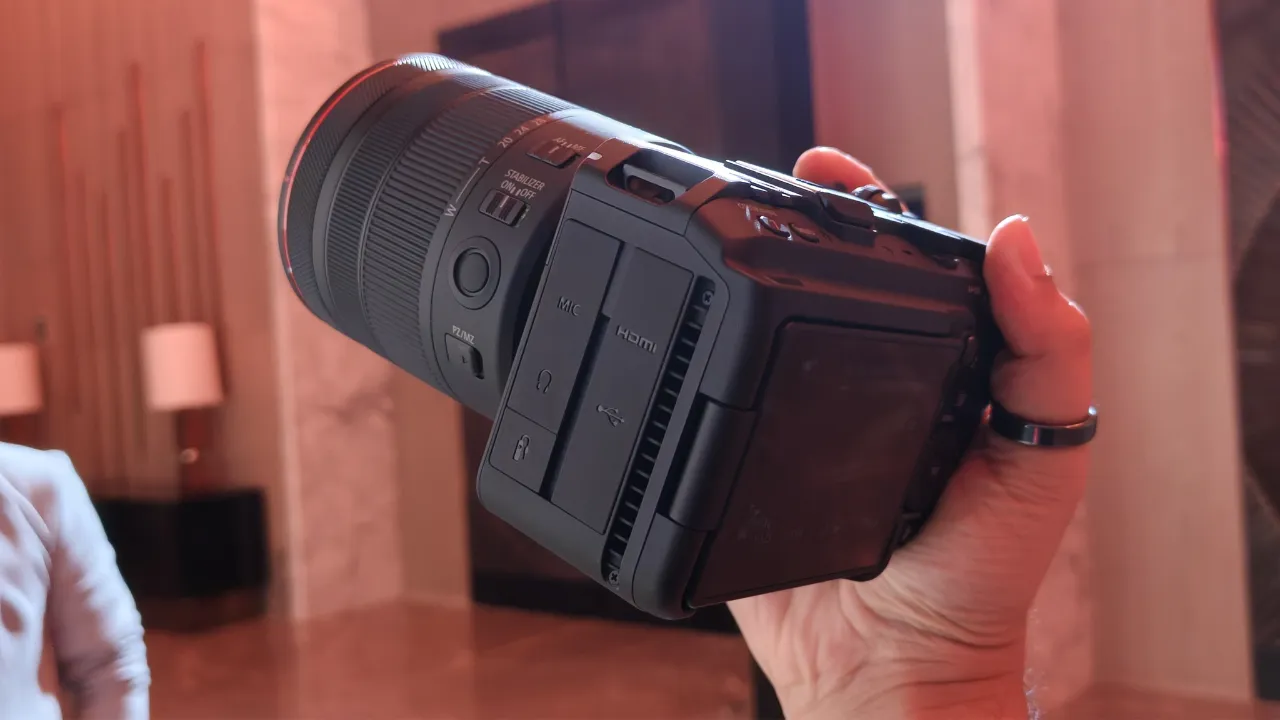
Speaking of the screen, the 3-inch, 1.62 million-dot vari-angle touchscreen is big, wide, and one of the more pleasant panels I have used on a mirrorless camera recently. The articulation is smooth, the touch response is snappy, and the viewing angles are generous enough to make run-and-gun solo shooting a much less frustrating experience.
The R6 V also features a rotating UI and a dedicated vertical tripod mount, making it a genuine tool for creators producing content in portrait orientation. For Instagram Reels and YouTube Shorts creators, vertical video support baked directly into a full-frame mirrorless body is, frankly, a godsend. It removes the awkwardness of having to crop or reframe footage in post, and the dedicated mount means handheld vertical shooting is properly balanced rather than a compromise.
That said, it does raise a practical question worth sitting with: how many Reels and Shorts creators will actually invest in a body priced at Rs 2,35,990 for the body alone, or Rs 3,55,995 bundled with the new RF 20-50mm lens? The vertical video functionality is genuinely useful, but the audience that benefits most from it is also the audience least likely to be shopping in this price bracket. It is a feature that feels slightly ahead of its buying demographic.
The Sensor and Processor: Serious Hardware
At the heart of the R6 V is a 32.5-megapixel full-frame CMOS sensor paired with Canon's DIGIC X image processor. This is a meaningful step up from the R6 Mark II, and the combination delivers what Canon promises: clean, low-noise capture across a very wide range of lighting conditions.
The native ISO range runs from 100 to 64,000, expandable to 50 to 102,400. In testing, the camera handles low-light situations admirably, maintaining usable detail at high ISOs where lesser sensors would have long surrendered to noise. Combined with 15-plus stops of dynamic range when shooting in Canon Log 2, the R6 V gives cinematographers genuine latitude in post-production, the kind of headroom that makes colour grading a pleasure rather than a rescue operation.
One notable absence, however, is a global shutter. Whether this is a significant miss or simply a cost-conscious decision will depend on what you are shooting. For fast-moving subjects under artificial lighting, rolling shutter artefacts remain a possibility.
The Headliner: 7K 30 RAW Video
The spec that will generate the most conversation is the 7K RAW video capability, and it deserves every word of attention it gets. The R6 V records internal 7K30 open-gate RAW at 6,960 x 4,640 in the native 3:2 aspect ratio, with 7K60 RAW Light available in a 17:9 DCI crop. Both deliver 12-bit colour depth, which is extraordinary for a body at this price point.
Beyond the RAW options, the camera offers 4K recording at up to 120 frames per second using 7K oversampling, meaning the detail and colour reproduction in the 4K output is derived from that much larger sensor area. The result is a noticeably cleaner, sharper image than you would get from a native 4K sensor. For slow-motion work, 2K recording at up to 180 frames per second is also available, albeit with a slight 1.13x crop. However, there is a 4K 120fps uncropped option.
The full recording format list is extensive. Canon has packed in 12-bit RAW, 10-bit XF-HEVC S/H.265, and 8/10-bit XF-AVC S/H.264, alongside a rotating colour profile system accessible via a dedicated colour button. Canon Log 2, Canon Log 3, HLG, PQ, Canon 709, BT.709, and 14 additional user-assignable profiles are also available.
Power Zoom: Nostalgic, Clever, and Slightly Contradictory
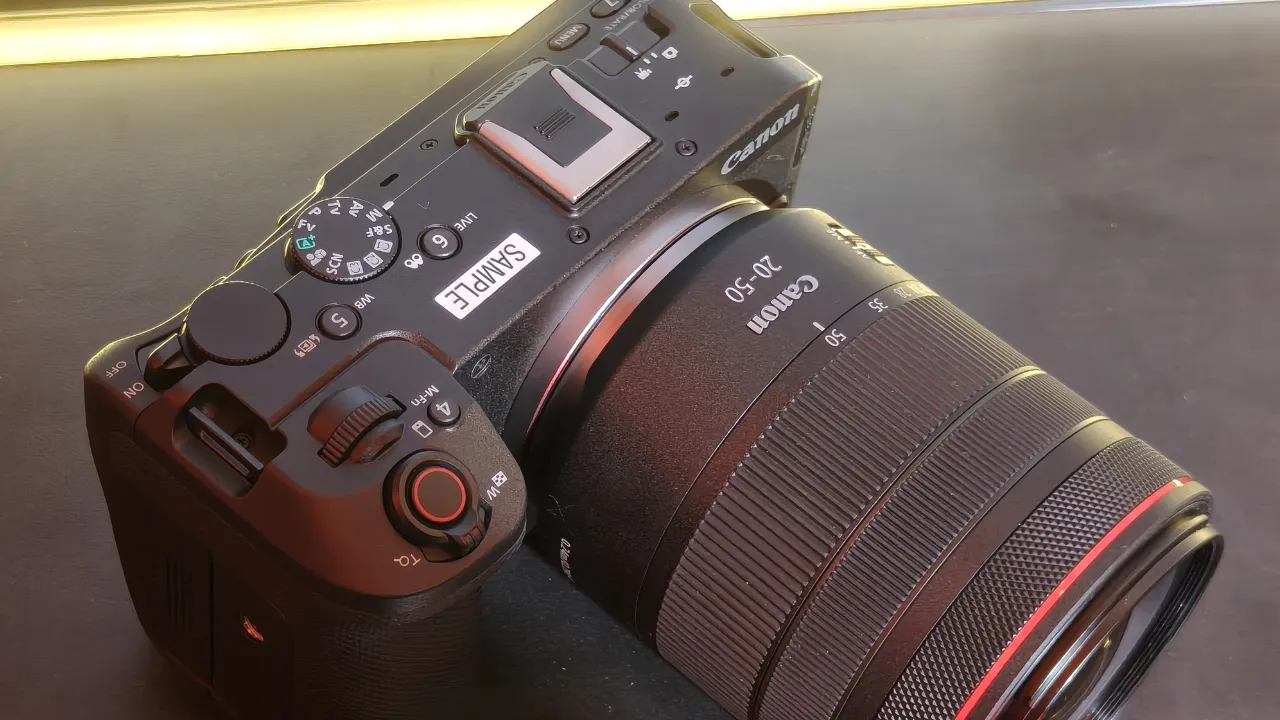
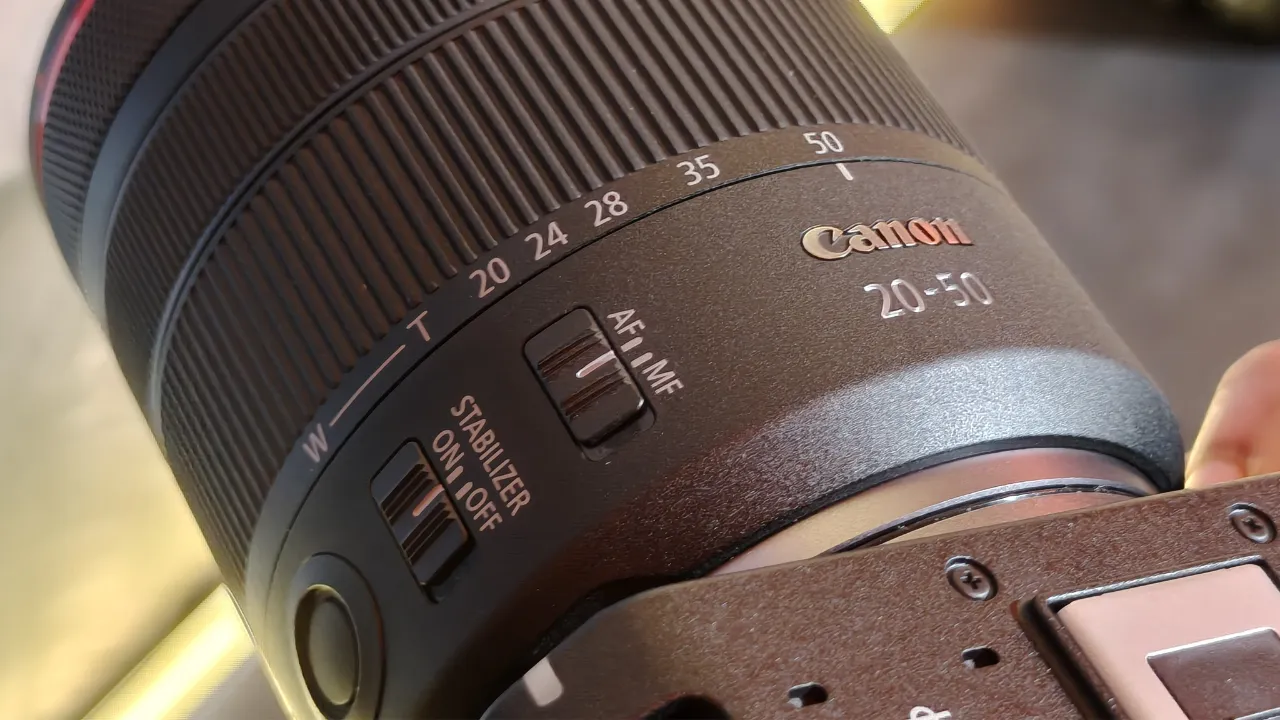
One of the more unexpected delights of handling the R6 V was discovering the Power Zoom button. Any RF-mount lens that supports the Power Zoom function can be operated directly from this dedicated control on the body, and the moment I saw it, it took me straight back to the point-and-shoot era. The motorised zoom controls on older Canon PowerShot and Sony CyberShot cameras came to mind immediately, and more specifically, the kit lens on my first mirrorless camera, the Sony A5100, which had a very similar electrically driven zoom mechanism.
Using this feature with the newly launched RF 20-50 F4L IS USM lens that ships with the bundle version of the R6 V adds another layer to the experience, and also a layer of mild contradiction. The zoom mechanism in this lens is fully motorised, which is a bit like power steering in a car: smooth, controlled, and surprisingly pleasant to operate. The zoom speed and intensity are both adjustable within the camera's settings.
It is exciting. It is also, depending on how you shoot, possibly redundant. Here is where I kept getting stuck: if the motorised zoom is designed to give you slow, cinematic, controlled zooms, that is genuinely useful for certain documentary and narrative styles. However, what about quick, energetic zooms where the motion blur itself is part of the aesthetic?
The Built-in Fan: A Big Deal For Video
This deserves its own section, because it is genuinely one of the most practically significant additions to the R6 V. The body has a built-in active cooling fan for thermal management, which addresses one of the most persistent frustrations of hybrid mirrorless cameras: overheating during extended video recording.
Autofocus And Stabilisation
The R6 V carries Dual Pixel CMOS AF II, Canon's highly regarded phase-detection autofocus system that has set benchmarks across the R series.
In-body image stabilisation rounds out the package, offering meaningful compensation for handheld shooting.
On the stills side, the R6 V supports burst shooting at up to 40 frames per second, along with a Pre-Continuous Shoot Mode that buffers a brief moment before the shutter is fully pressed, helping ensure you do not miss fast-moving action.
Storage
The dual card slot setup on the R6 V is well thought out. The inclusion of both a CFExpress Type B slot and an SDXC UHS-II slot is a genuinely welcome move. CFExpress handles the heavy lifting of 7K RAW workflows, while the SD card slot gives shooters a far more accessible and affordable option for proxies, backup recording, or lighter formats.
Initial Thoughts: A Cinema Camera That Does Not Call Itself One
Perhaps the most strategically astute thing about the Canon EOS R6 V is what it does not say about itself. This is simply a cinema-capable camera. The 7K RAW recording, the 15-plus stops of dynamic range, the active cooling, the colour science, the codec options: all of this is the language of cinema production. And yet Canon has not branded it as a cinema camera.
That is a smart move. The "cinema camera" label, while accurate, tends to intimidate a large segment of potential buyers who might otherwise find this camera perfectly suited to their work.
The Canon EOS R6 V is a confident, well-executed statement from Canon about where the R6 line was always headed. It takes the video-friendly reputation of its predecessors and builds a camera around it properly.
The Canon EOS R6 V is priced at Rs 2,35,990 for the body only and Rs 3,55,995 bundled with the RF 20-50mm lens. Available through authorised Canon retailers.
For more tech reviews, keep following BW Businessworld and BWTV Prime. |





