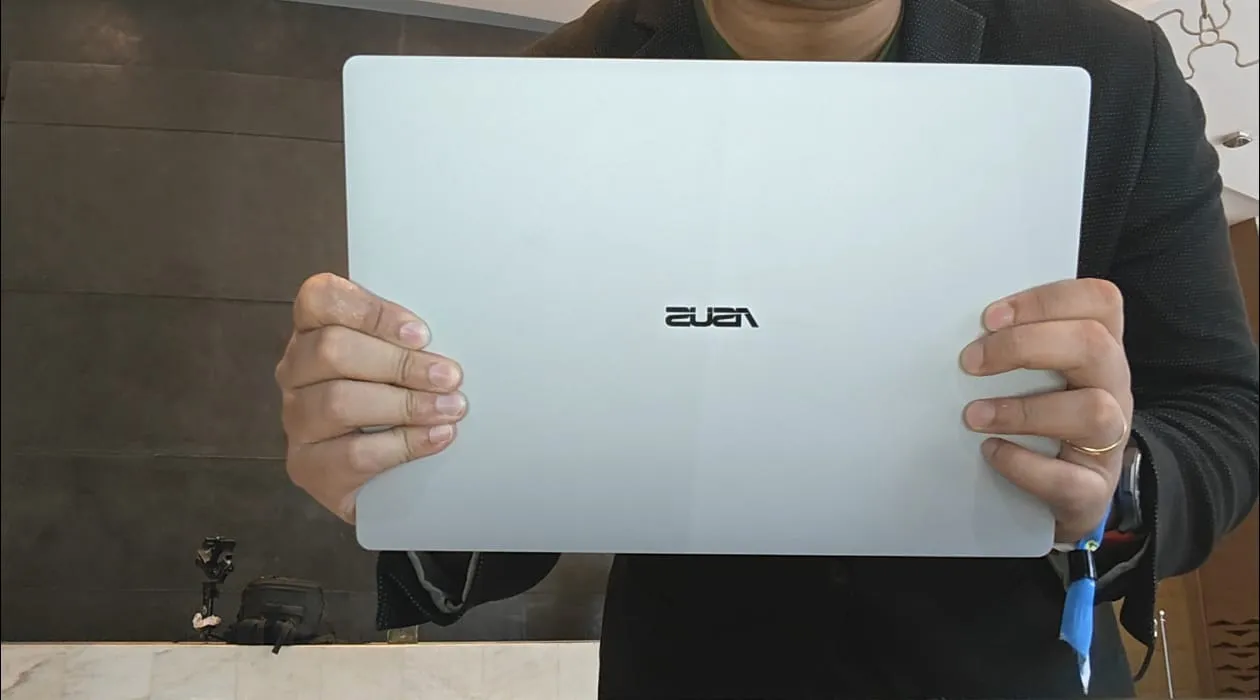
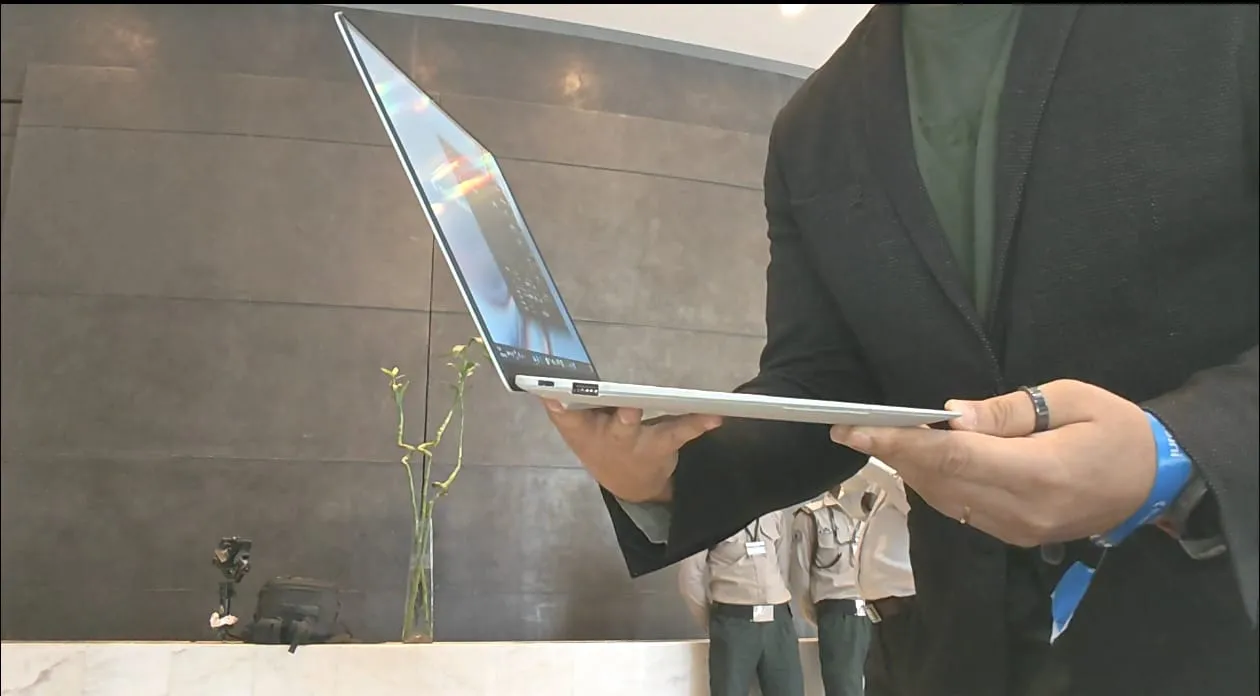
ASUS launched the ExpertBook Ultra in India on 22 April, positioning it as nothing less than the definitive flagship business laptop in the market today. That is a considerable claim, given the competition from Apple, Lenovo, and Dell in this space. But after going through what ASUS has packed into a 0.99 kg chassis barely 10.9 mm thick, it becomes clear that this is not mere marketing bluster.
The Weight Problem? Solved
The central tension in premium business laptop design has always been the same: the thinner and lighter you go, the more you sacrifice in performance and durability. ASUS appears to have taken that assumption apart with the ExpertBook Ultra. The chassis is precision CNC-machined from AZ31B magnesium-aluminium alloy, a material more commonly found in aerospace applications and Formula 1 racing cars.

.jpeg)
It is, as ASUS claims, 34 per cent lighter than standard aluminium alloys while maintaining structural integrity. On top of that sits a nano liquid ceramic coating processed through Plasma Electrolytic Oxidation, giving the surface a 9H hardness rating. For context, that is five times more scratch-resistant than the industry standard of 3H.
The laptop comes in two display variants, with the P-OLED version weighing in at 0.99 kilograms and the Tandem OLED variant at 1.09 kilograms. Both are exceptionally light for what sits inside them. It is a tough display, which adds another layer of utility to the product.
.jpeg)
The overall build quality of the ExpertBook Ultra is insanely good. It has a great first impression, is so lightweight that carrying it everywhere you go will never feel like a task, and lastly, the hinge on the lid is just too good. This ensures that the lid opens as smoothly as a premium device should. PS - It did clear the one-finger-lift test.
Performance Without Throttling, At Least That Is What The Spec Sheet Says
The more impressive engineering story is under the hood. The ExpertBook Ultra is powered by Intel Core Ultra Series 3 processors, including the Core Ultra X7 358H, and uses ASUS's ExpertCool Pro cooling system featuring dual fluid-dynamic bearing fans with 97 ultra-thin liquid-crystal polymer blades and 0.1mm aluminium heatsink fins. The result is a sustained 50W CPU TDP in Turbo mode without throttling, even when docked with the lid closed. That is a figure that most thin-and-light laptops simply cannot sustain.
.jpeg)
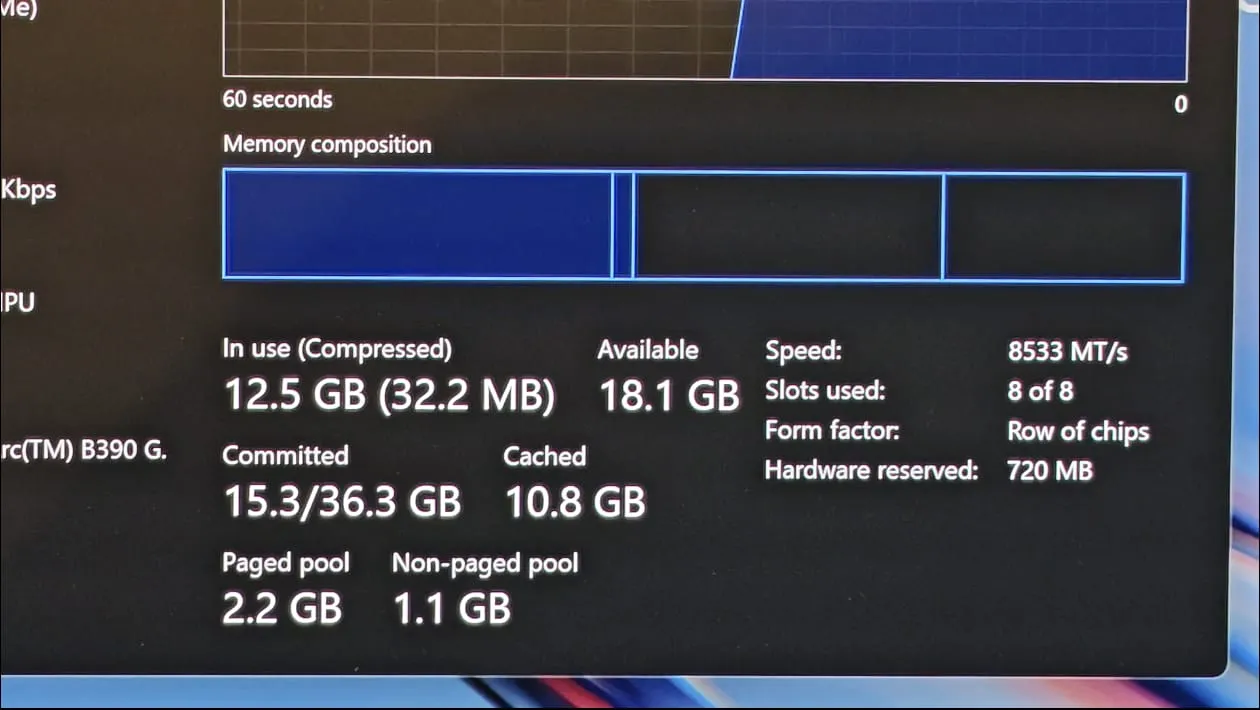
The integrated Intel Arc B390 graphics is another standout. ASUS claims it outperforms a dedicated NVIDIA RTX 4050 running at 30W TGP by approximately 35 per cent in 3DMark Time Spy benchmarks. If that holds up under independent testing, it would be a significant statement about where integrated graphics has arrived in 2026.
Storage pushes boundaries as well. The ExpertBook Ultra is among the first laptops to ship with up to PCIe Gen 5 NVMe SSDs, claiming sequential read speeds of up to 14,090 MB/s and write speeds of up to 8,313 MB/s. Paired with up to 64 GB of LPDDR5X memory clocked at 9600 MT/s, the memory bandwidth advantage over the MacBook Pro M4 is cited at over 50 per cent. The NPU delivers up to 50 TOPS, the GPU delivers up to 120 TOPS, pushing total platform AI compute to up to 180 TOPS, which makes this a Copilot+ PC capable of running large language model inference locally. That said, I can run LLMs on my Intel Lunar Lake laptop just fine, so how much of a difference does the 180 TOPS total compute actually make has to be seen in a long-term review.
.jpeg)
.jpeg)
.jpeg)
There are plenty of I/O ports on this machine. There are two USB Type-C Thunderbolt 4 ports, one on either side. You will also see two Type-A USB 3.2 Gen 1 ports, one on either side. Along with these ports, you also have an HDMI port and a 3.5mm audio combo jack. Shockingly enough, there was no RJ45 Ethernet port. You essentially get a three 4K-display setup with this machine.
The Display Is The Story
The flagship display option is a 14-inch 3K (2880x1800) Tandem OLED touchscreen, and it is genuinely different from what most laptops offer. Tandem OLED stacks two light-emitting layers rather than one, delivering triple the brightness at 40 per cent lower power consumption, and significantly reducing the risk of burn-in that has long been a concern with OLED panels. Peak HDR brightness hits 1,400 nits with 100 per cent DCI-P3 coverage and Delta E below 1 for colour accuracy.
.jpeg)
ASUS has also applied Corning Gorilla Glass Victus and Gorilla Matte with nano-etching to scatter incoming light without compromising image contrast. The result, at a measured 19 gloss units, makes the ExpertBook Ultra's display reportedly less reflective than many non-glass matte panels from competing brands. This is a criminally underrated feature and is a boon for people who like to take their work outside. However, if you are into vibrant colours, the display might just give you a little bit of FOMO as you will miss out on that typical glossy OLED brilliance.
Security That Goes Into The Hardware
Enterprise procurement teams will note that the ExpertBook Ultra complies with the NIST SP 800-193 Firmware Resiliency Framework, which means firmware-level threats, such as UEFI-targeting malware, trigger automatic detection and self-recovery without any user intervention. The motherboard integrates a discrete TPM 2.0 chip certified to FIPS 140-2, dual self-healing BIOS ROM, and Microsoft Pluton architecture. Biometric authentication uses a Match-on-Chip fingerprint sensor, meaning biometric data never leaves the sensor itself and is never stored in Windows. Microsoft Secured-Core PC certification comes as standard.
Battery Life And Charging
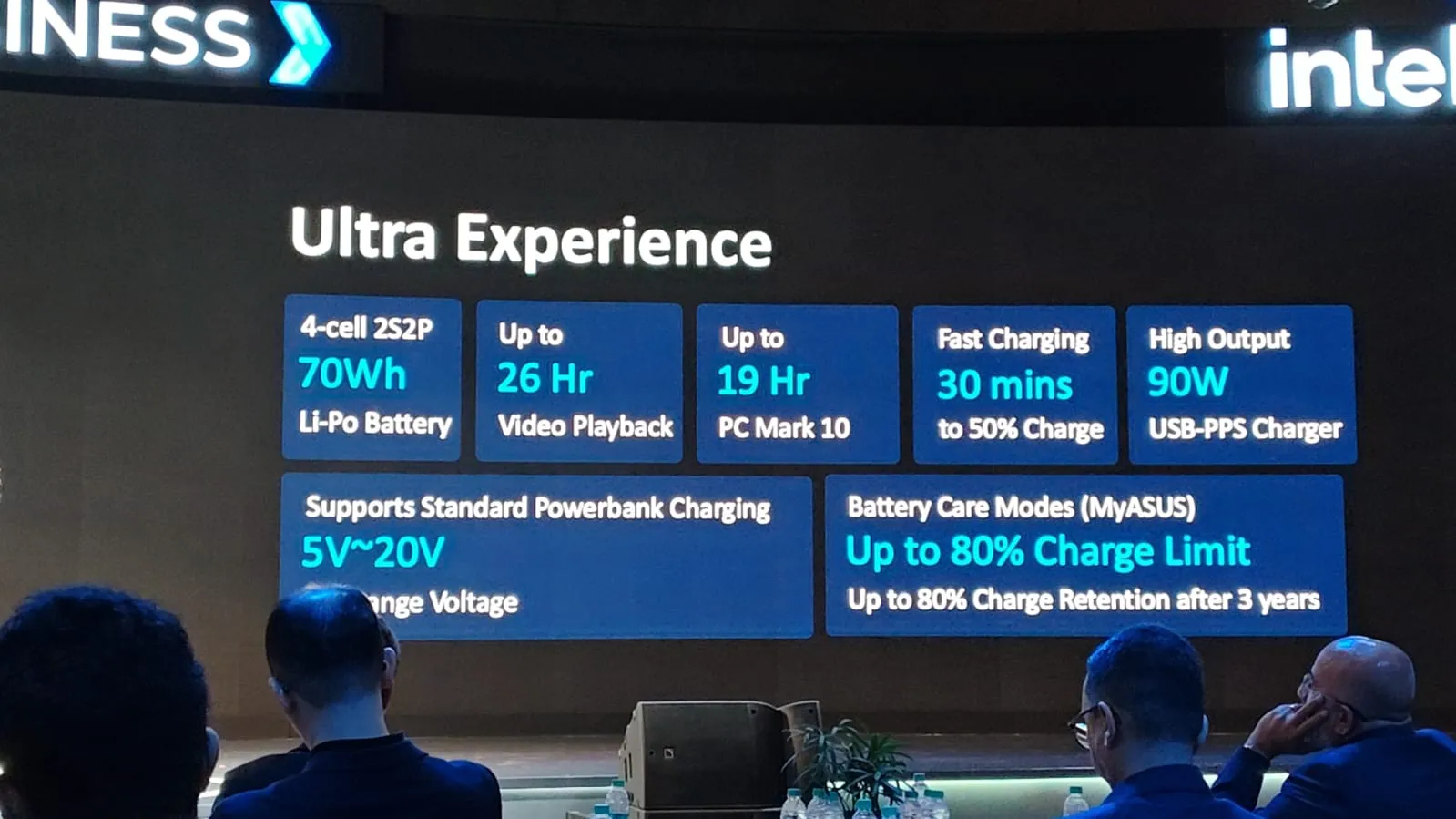
The 70 Wh battery uses a 2S2P (2-series, 2-parallel) architecture rather than the conventional 4S1P design, which ASUS says improves DC-DC conversion efficiency. Rated battery life is up to 26 hours of local video playback. Fast charging via the bundled 90W USB-C adapter refills the battery to 50 per cent in 30 minutes, and the device supports the full 5V to 24V charging range, meaning it can draw power from a standard smartphone power bank or an aeroplane seat USB port in a pinch.
Beyond the Flagship: The P Series Expansion Hits Hard
Alongside the Ultra, ASUS has significantly expanded its ExpertBook P series with the P3 and P5 models, targeting businesses and prosumers across all sizes and budgets. The ExpertBook P5 steps up to Intel Core Ultra Series 3 processors with Intel Xe3 graphics in 14-inch and 16-inch configurations, while the P3 offers Core Ultra Series 2 in either an all-plastic or one-metal chassis across the same display sizes. Both models support up to 96GB DDR5 RAM via dual SO-DIMM slots and dual PCIe 4.0 SSD slots, which is the kind of expandability that IT departments genuinely appreciate for long-term fleet deployments.
The P series carries the same MIL-STD-810H certification across 24 test procedures, 50,000-cycle hinge validation, and spill resistance up to 78cc on the keyboard. Enterprise-grade security features, including TPM 2.0, self-healing BIOS, optical chassis intrusion detection, and FIDO2-encrypted fingerprint sensors, are standard. A bundled one-year McAfee+ Premium subscription adds an extra software security layer.
The ExpertBook Ultra opens for pre-orders on Flipkart at a starting price of Rs 2,39,990 (inclusive of taxes) for the Core Ultra X7 Series 3, 32GB RAM model. The Intel Core Ultra X7 with 64GB RAM model will cost you Rs 3,49,990. Pre-orders placed before 29 April come with a notable bundle: five-year onsite warranty, five-year battery warranty, and five-year accidental damage protection worth Rs 12,190, along with Rs 20,000 off on Axis Credit Card EMI, Rs 20,000 in exchange discount, 24-month no-cost EMI, a free one-year Flipkart Black membership, and a free McAfee+ Premium subscription.
The ExpertBook P3 starts at Rs 94,990 with a limited-period launch discount of Rs 6,000 on Flipkart. The ExpertBook P5 is priced from Rs 2,14,990 and will be available shortly.
Initial Thought: The Apex Of Windows Thin And Light Laptops?
The Asus ExpertBook Ultra is a machine built around a clear thesis: that a sub-1 kg laptop can deliver workstation-class performance, enterprise-grade security, and a display that competes with anything in the category. On paper, the specification sheet is formidable to a degree that few rivals come close to matching at any weight. Whether the thermal claims, battery figures, and GPU benchmarks hold up under real-world, sustained workloads is a question for a full review. But as a statement of intent, ASUS has drawn an unmistakably aggressive line in the sand.
What Stood Out?
- Build quality
- Plenty of I/O ports
- 3K Tandem OLED Touch screen display
- MLT STD 810H
- Core Ultra 3 X7 processor (Panther Lake proved to be a very potent CPU)
- 180 TOPS total compute
The ExpertBook Ultra with the Intel Core Ultra X9 processor will be launched in the near future. Keep following BW Businessworld and BWTV Prime for upcoming developments. |





