 Summary of this article Summary of this article
- Miya poetry emerged as a reclamation of identity, turning a slur into a form of resistance, but poets now hesitate to publish openly due to FIRs, arrests, and threats of prosecution.
- Activists and poets link the decline of Miya expression to evictions, delimitation, and rhetoric by the state leadership that frames the community as outsiders.
- While public poetry has receded, Miya expression is finding new outlets in songs, films, and digital content—even as the sense of precarity persists.
Write
Write Down
I am a Miya
My serial number in the NRC is 200543
I have two children
Another is coming
Next summer.
Will you hate him
As you hate me?
Write
I am a Miya
When Hafiz Ahmad, a Bengal-origin Assamese scholar, wrote this in 2016 and posted it on his Facebook page, it created quite a stir, reviving the tradition of Miya poetry. The erasure of Miya culture and identity is a constant theme in the poetry by Ahmad, who is president of the Miya community’s literary society (Char Chapori Sahitya Parishad).
As Assam goes to the polls on April 9, Ahmad says the theme of erasure is back in the limelight as he is campaigning against the incumbent chief minister, Himanta Biswa Sarma, who was “instrumental” in the erasure of Miya identity from public spaces of Assam. Ahmad is part of Ahom Nagrik Sammelan, which is a joint body of intellectuals from all groups of Assamese society that is going to crucial assembly constituencies and canvassing for the Opposition-led alliance.
[url=]Related Content[/url]
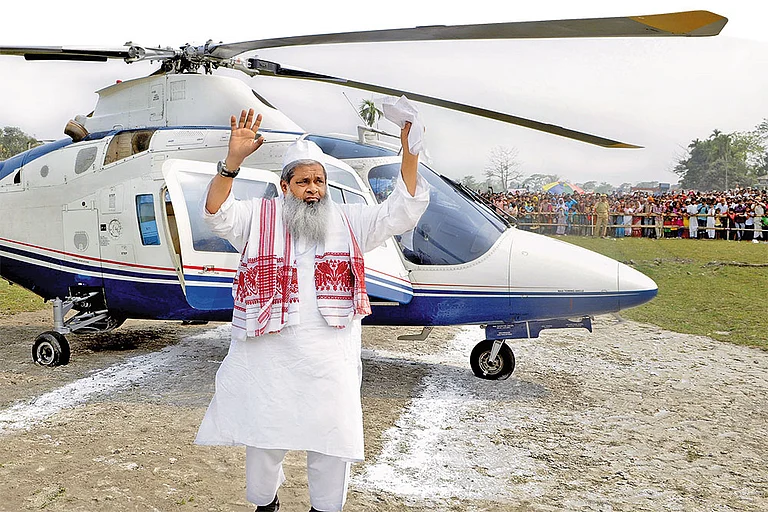 Assembly Elections 2026: Who Speaks for Assam’s Muslims? Badruddin Ajmal Stakes His Claim Assembly Elections 2026: Who Speaks for Assam’s Muslims? Badruddin Ajmal Stakes His Claim
 In Assam, Citizenship, Land, Identity Collide Ahead Of Polls In Assam, Citizenship, Land, Identity Collide Ahead Of Polls
 Through The Lens Of History: How Travel Photographer Ashfaq Ahmad (KhatarnakJanab) Documents India’s Heritage Through The Lens Of History: How Travel Photographer Ashfaq Ahmad (KhatarnakJanab) Documents India’s Heritage
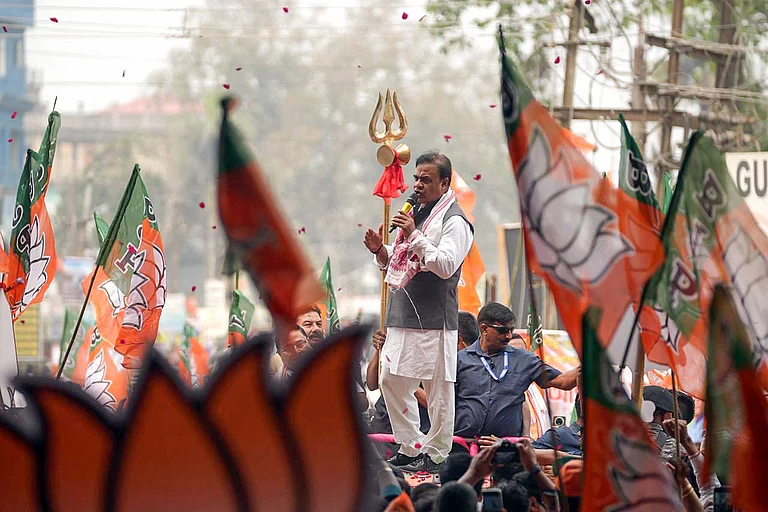 Assembly Elections 2026: How Himanta Biswa Sarma Became a Master of Polarisation Assembly Elections 2026: How Himanta Biswa Sarma Became a Master of Polarisation
[url=]Related Content[/url]
Assembly Elections 2026: Who Speaks for Assam’s Muslims? Badruddin Ajmal Stakes His Claim
In Assam, Citizenship, Land, Identity Collide Ahead Of Polls
Through The Lens Of History: How Travel Photographer Ashfaq Ahmad (KhatarnakJanab) Documents India’s Heritage
Assembly Elections 2026: How Himanta Biswa Sarma Became a Master of Polarisation
Miya poetry as a tool of expression became so popular also because it turned “Miya” – a slur for Bengal-origin illegal immigrant – on its head. The Miya community resides in the chars, an Assamese word for sandy landmasses or sandbars that emerge from riverbeds, particularly in the Brahmaputra River. These areas are often used for farming but are impermanent due to erosion and flooding.
The Miya community is largely composed of peasants brought over by the British Raj from what was then united Bengal. The majority of these peasants came from the Mymensingh region of northeast Bengal, now in Bangladesh. The residents of the chars are among the poorest and least educated populations in Assam. The first Miya poem, A Charuwa's Proposition, was published in 1985 in the aftermath of the Nellie Massacre by Maulana Bande Ali. Miya Muslims are also referred to as Char-Chapori people in Assamese. |





