Aggressive domestic institutional buying has helped stabilise markets, but rising oil prices, slowing earnings growth, rupee weakness and the global AI-driven shift toward Taiwan and South Korea have triggered one of the sharpest foreign investor exits from Indian equities.
Foreign investors have withdrawn more than USD 22 billion from Indian equities so far in 2026, surpassing the previous annual peak outflow of USD 18.9 billion recorded in 2025, as surging crude oil prices and the global rush toward AI-linked markets weakened sentiment toward India.
According to National Securities Depository (NSDL) data, nearly USD 19 billion of the selling has taken place after the escalation of the Iran conflict, which pushed crude oil prices above USD 100 per barrel and reignited concerns over inflation, fiscal stress and India’s external vulnerability.
India imports nearly 90 per cent of its crude oil requirements and remains heavily dependent on Middle Eastern supplies, making it one of the emerging markets most exposed to an energy price shock.
Financial stocks have borne the brunt of the foreign selling, witnessing outflows worth Rs 79,981 crore, while IT stocks have seen withdrawals of around Rs 22,000 crore.
The sell-off has also coincided with slowing corporate earnings growth and concerns over elevated market valuations. Nifty earnings growth stood at just 7.3 per cent in FY26, even as Indian equities traded at roughly 22-times earnings, a premium many global investors increasingly found difficult to justify.
“When you are priced for perfection and deliver imperfection, global allocators have no patience,” said Gurvinder Juneja, Principal Officer at Fortuna Asset Managers.
Juneja said the dominant global investment narrative currently revolves around artificial intelligence infrastructure, semiconductors and data centres, areas where India has limited representation.
“The dominant narrative for global capital is to chase returns from AI and semicon themes. India is currently weak or non-existent in both,” he said.
DIIs Emerge As Stabilising Force
Even as foreign investors continued to pull money out, domestic institutional investors (DIIs) have emerged as a critical counterweight for Indian equities. Mutual funds, insurers, banks and retirement funds invested more than Rs 3 lakh crore into Indian stocks during the first four months of 2026, despite sharp market volatility and sustained foreign selling exceeding Rs 2 lakh crore in the secondary market.
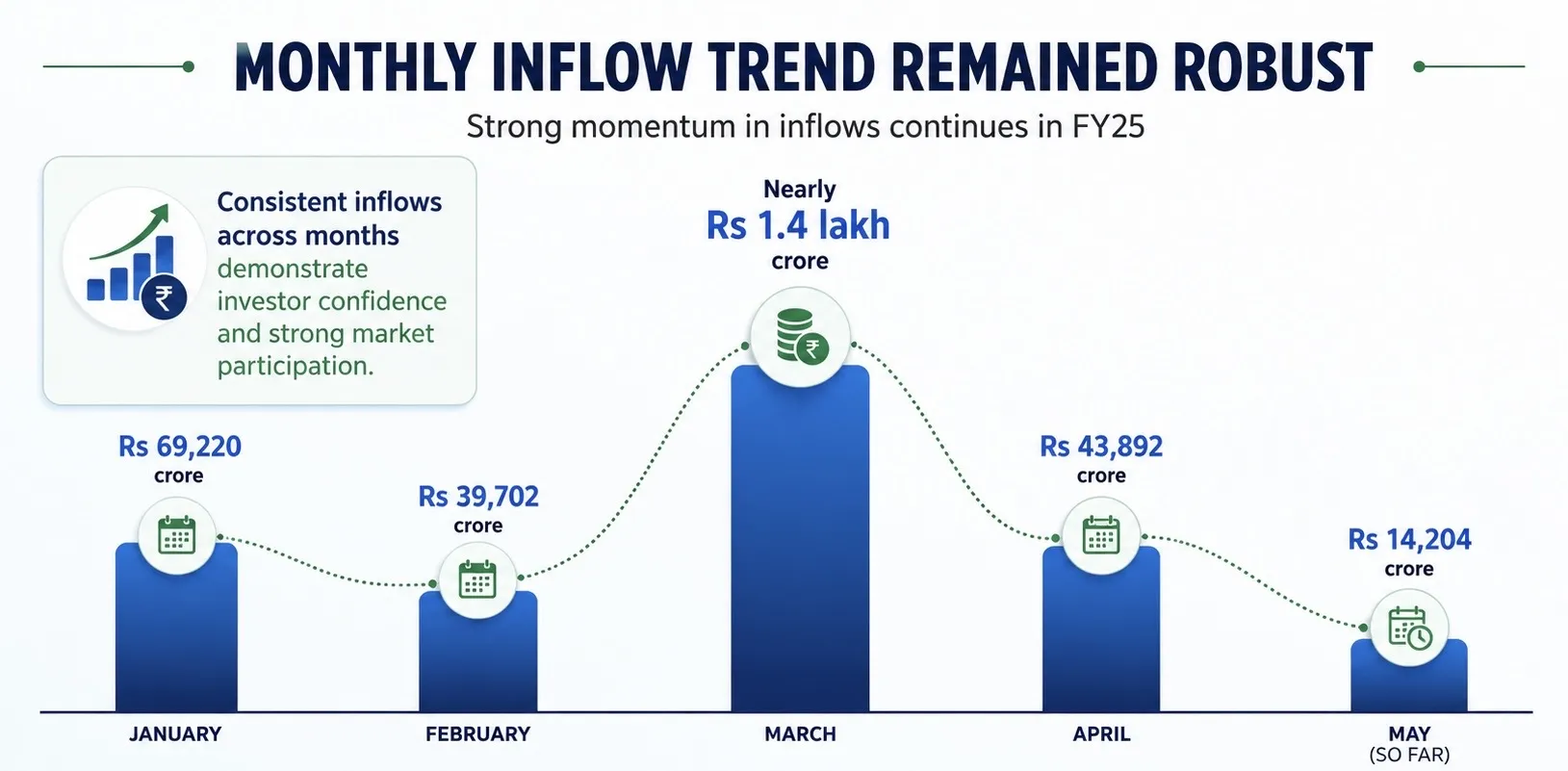
The aggressive domestic buying is part of a broader structural shift underway in Indian markets. DIIs invested a record Rs 7.75 lakh crore into equities in 2025 after investing Rs 5.23 lakh crore in 2024, sharply higher than Rs 2.76 lakh crore in 2022 and Rs 1.82 lakh crore in 2023.
Analysts attribute this resilience to rising retail participation, strong SIP inflows and growing household financialisation. “Domestic investors have become a stabilising force for Indian equities. Resilience is provided during periods of FII volatility by this structural change. However, domestic liquidity cannot permanently counteract persistent offshore outflows,” said Prashata Seth, CEO, Prudent Investment Managers LLP.
He added that attracting foreign investors back would require stronger earnings growth, relatively attractive valuations and macroeconomic stability, including lower inflation and currency stability.
India’s MSCI Weight Slips As Global Capital Chases AI Markets
India’s weight in the MSCI Emerging Markets Index has fallen sharply over the past year as global capital rotated toward AI and semiconductor-driven markets such as Taiwan and South Korea.
India’s representation in the index has dropped from nearly 21 per cent in September 2024 to around 12 per cent by May 2026, approaching levels last seen during the covid pandemic.
The decline has been concentrated in sectors heavily represented in global portfolios, including banking, IT and FMCG stocks. Some global funds have adopted tactical strategies involving short positions on Indian IT and long exposure to technology-heavy Asian markets.
Shahzad Madon, MD & CEO, TCG AMC said the AI investment frenzy has disproportionately benefited select emerging markets linked to the semiconductor and digital infrastructure supply chain.
“The frenzied global AI infrastructure build-out has led to huge demand and an extrapolation of super-normal earnings into the future in selective companies in emerging markets,” Madon said.
However, he believes the trend could moderate if India’s earnings cycle improves. “With some moderation in the global AI narrative and a pick-up in earnings growth in India, we may see a reversal of this trend of outflows from Indian equities,” he said.
Madon added that India’s long-term structural story remains intact, supported by manufacturing, defence, energy transition and digital infrastructure investments, alongside resilient domestic capital flows and stronger corporate balance sheets.
Still, analysts caution that India is temporarily losing momentum in global emerging-market allocation frameworks as investors increasingly prioritise AI-linked growth stories over broader structural themes. |





