There are phones that chase power. And then there are phones that chase presence. The Motorola Signature, which I tried at CES 2026 in Las Vegas, is firmly in the second camp — an ultra-premium Android flagship that’s trying to win you over the old-fashioned way: with materials, restraint, balance, and the sort of design confidence that doesn’t need to shout. The bigger ambition, though, is AI. Not the “look ma, a chatbot” flavour — but a cross-device, Lenovo-to-Motorola ecosystem play that wants to follow you from laptop to phone to wearable without losing the plot.
It’s not a full review. It’s not even a verdict. But as first impressions go, this felt like Motorola quietly walking back into the room where the serious flagships live.
What I Saw At CES: The Venetian’s Awkward Lighting Test
I saw the phone inside Lenovo’s display room at The Venetian — the kind of environment that usually murders subtle finishes and makes every screen look like it’s fighting for survival under showroom glare. And yet, the Signature still managed to look composed. The display held its own. The industrial design didn’t collapse into reflections. The phone didn’t feel like a prototype begging for sympathy. It felt like a finished object, built to be handled.
CES floors can be chaotic — like trying to judge a guitar tone while someone’s vacuuming the studio. The Signature, oddly, came through with its character intact.
In-Hand Feel: Ultra-Thin, But Not Fragile
The first thing you notice is slimness, but the more important thing is what Motorola does with it. The Signature doesn’t feel like a diet flagship that lost weight by starving the essentials. It feels balanced, almost effortless, with weight distribution that makes it sit naturally in the hand. Motorola positions it as an “ultrathin” device at 6.99 mm, and the ergonomics support that intent — the kind of phone you don’t subconsciously readjust every ten seconds.
And the materials matter. Not because “premium” is a press-release word, but because the back finish genuinely changes the experience of holding the phone. It’s the difference between a glossy suit and a well-cut one.
Display: Flat, Minimal Bezels, And Serious Numbers Behind It
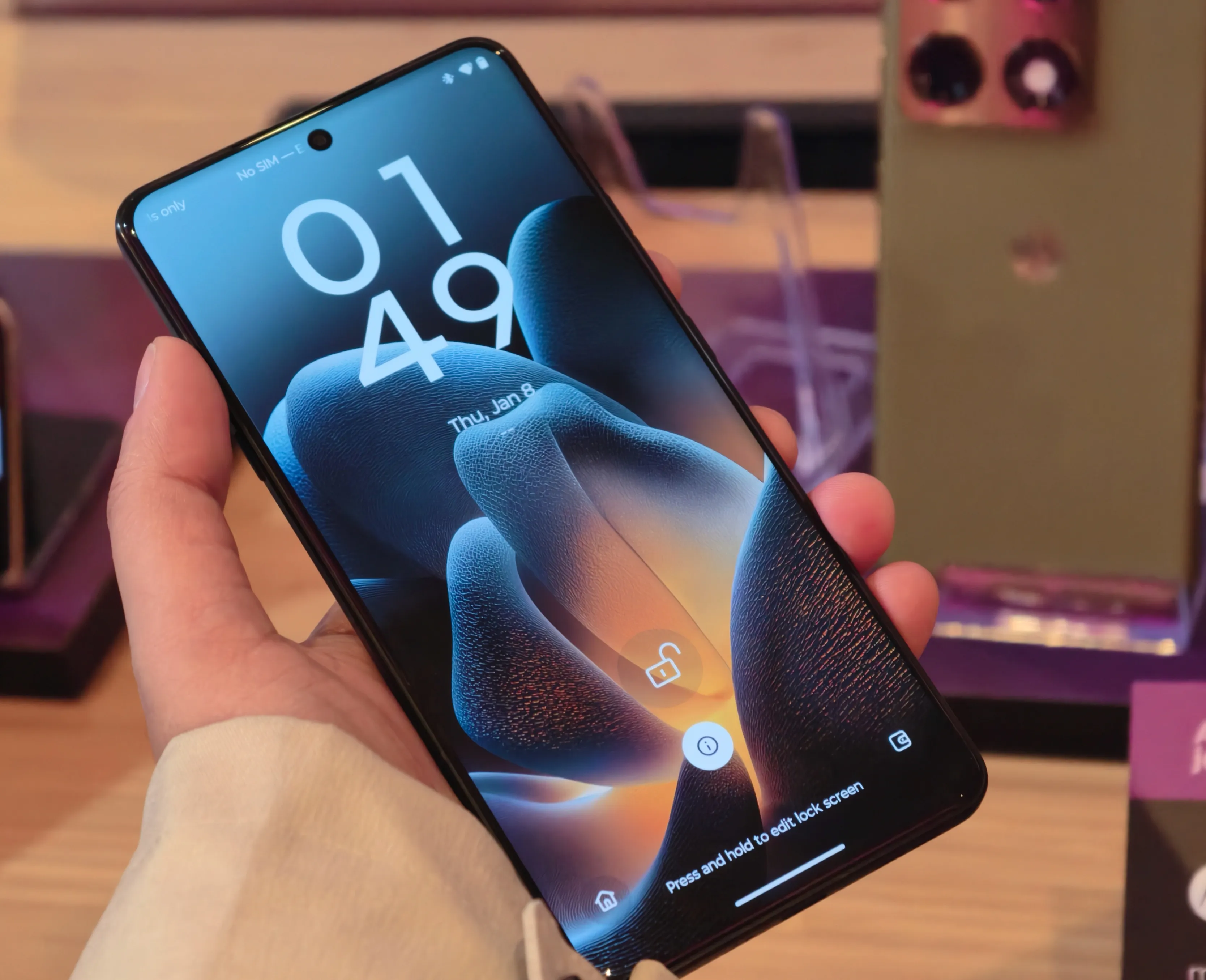
My note at CES was simple: it’s a large, flat panel with minimal bezels that makes content look clean and uninterrupted. Motorola’s own positioning fills in the hard numbers: a 6.8-inch Extreme AMOLED display with 165 Hz refresh rate, plus Dolby Vision support.
On a show floor where everything is trying too hard, a flat display with disciplined bezels can feel oddly luxurious. It’s less “look at me” and more “use me”.
Performance + Software: Near-Stock Calm, Not Skins-Over-Substance
Motorola’s best software trait has often been what it doesn’t do — fewer gimmicks, less visual noise, more immediacy. In my brief time with the Signature, the phone felt snappy moving through apps and menus, and the experience had that rare quality of feeling unforced. Smooth, fast, confident.
Motorola also promises up to seven years of Android OS and security upgrades, which matters more than ever in this tier — not just for longevity, but for resale value, trust, and the expectation that an expensive phone shouldn’t age like milk.
Chipset: Snapdragon 8 Gen 5 — Powerful, But Not The Absolute Peak
Here’s where the positioning gets interesting. Motorola says the Signature runs on the 3 nm Snapdragon 8 Gen 5 Mobile Platform.
On paper, that’s a flagship chip — but Qualcomm’s portfolio now has a sharper hierarchy, with Elite-tier Snapdragon 8 branding sitting at the very top end. In other words, the Signature is aiming for “this is plenty for almost everyone” rather than “we brought the biggest nuclear reactor to a knife fight”.
That’s not a compromise by default. If Motorola manages thermals, sustained performance, and camera processing well, this tier can be the sweet spot — like choosing the F1 car that finishes races reliably instead of the one that sets one glorious lap and then cooks itself.
AI + Lenovo Ecosystem: Qira Is The Real Strategy
The most revealing part of the Signature story isn’t a megapixel count. It’s Motorola’s new AI direction.
Motorola and Lenovo are pitching Motorola Qira as a unified AI layer that spans devices — combining Lenovo AI Now and moto ai into one system with a shared knowledge base and cross-device context.
It also “leverages partnerships” with Microsoft 365 and Copilot, Qualcomm and Intel, Perplexity, and Google — which is notable because it suggests Motorola doesn’t want to bet on a single AI religion. It wants a practical assistant that plugs into the real services people already use.
In the demo flow, the philosophy felt like “AI that travels with you”, not AI that lives inside one app. If it actually works at scale, it’s a smarter differentiator than another benchmark flex. Any Android phone can run Gemini. Anyone can download ChatGPT. The hard part is making AI feel native across devices without turning it into a Frankenstein of half-integrations.
Cameras: Big Ambition, Slim Body, And The Usual Processing Question
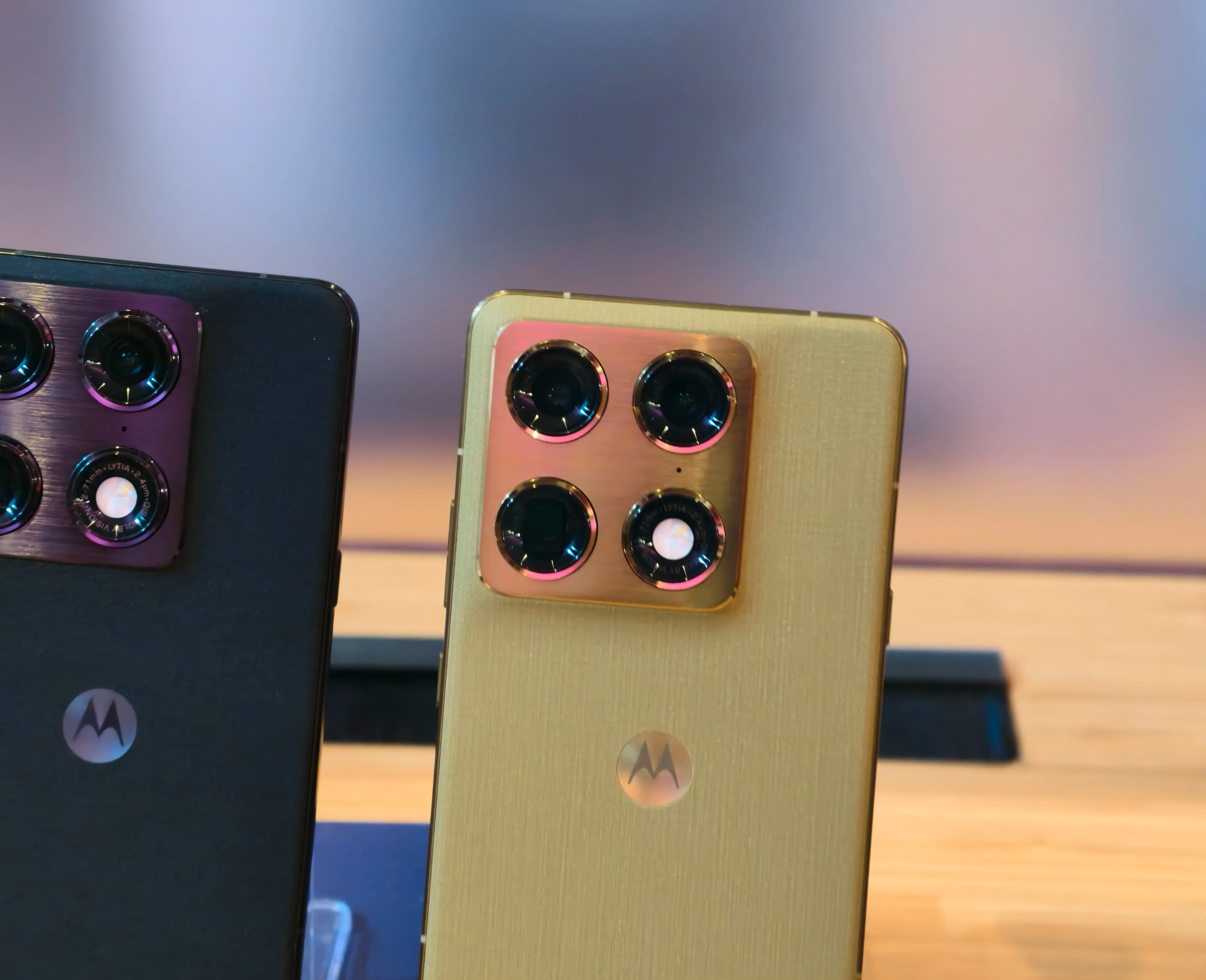
My CES impression was that imaging is central here — and Motorola’s own spec framing backs that up. It calls the Signature “the first ultrathin smartphone in its class with four 50 MP cameras”, and it points to a Sony LYTIA sensor as part of the system.
On a phone this thin, the camera story always comes with an asterisk: physics is undefeated. The more important question isn’t “is it 50 MP?” — it’s whether the tuning lands. Skin tones. Motion. HDR consistency. Night processing that doesn’t look like a watercolour filter. That’s what separates a flagship camera from a spec-sheet one.
Battery: The Quiet Flex
Motorola says it’s packing a 5200 mAh silicon-carbon battery, with 90 W TurboPower charging and 50 W wireless charging.
That’s the kind of specification that doesn’t photograph well for marketing, but matters brutally in real life — especially once you’re running higher refresh rates, brighter panels, and more on-device AI.
Where It Lands In The Premium Android Fight
This phone isn’t launching into a quiet market. Premium Android has become a knife-edge segment: Samsung’s Ultras and foldables dominate mindshare, OnePlus plays the performance-value assassin, Xiaomi swings hard on hardware bravado, and Google’s Pixel continues to sell a particular kind of camera-and-software purity.
At the same time, India is premiumising steadily — with the super-premium tier (over $800 / roughly Rs 66,000–70,000 depending on timing) becoming a more serious battleground than it used to be, dominated by Samsung and Apple in recent IDC snapshots.
For Motorola, that context matters. If you’re going ultra-premium, you don’t just need a “good phone”. You need a reason that survives comparison charts and store lighting. Signature’s answer seems to be: build something thin and luxurious, then make AI the ecosystem glue, not a bolt-on.
What I Still Need To Test Before A Full Review
This is where the romance ends and the work begins. I want to test sustained performance and heat management. I want to see if that slim frame stays comfortable after a long camera session. I want to see whether Motorola’s imaging pipeline finally looks grown-up in tricky indoor light. And I want to know how Qira behaves when the phone isn’t on its best behaviour in a demo — when your day is messy, your network is weak, and your notifications are endless.
Because that’s the real test. Not CES lighting. Delhi airport Wi-Fi.
The Closing Thought: Why India Matters Here
Motorola hasn’t publicly locked in India specifics in the same crisp way it has detailed the product globally — but the strategy screams India relevance.
If Motorola can price it intelligently, keep availability tight, and deliver camera consistency, the Signature could be the company’s most credible premium swing in years — a phone that’s not just fast, but beautifully considered.
Core Specs Table
Category
| Spec
| Display
| 6.8-inch Extreme AMOLED, 165 Hz (Dolby Vision)
| Chipset
| Snapdragon 8 Gen 5 (3 nm)
| RAM/Storage
| Not confirmed publicly
| Rear Cameras
| Four 50 MP cameras (Motorola claim); Sony LYTIA referenced
| Front Camera
| Included in “four 50 MP cameras” claim (details not specified)
| Battery
| 5200 mAh silicon-carbon
| Charging
| 90 W TurboPower wired, 50 W wireless
| Software
| Android; up to seven years OS + security upgrades
| AI
| Motorola Qira unified AI ecosystem; partnerships include Microsoft 365/Copilot, Google, Perplexity, Qualcomm/Intel
| Connectivity
| Not confirmed publicly
| India availability
| Not confirmed publicly
|
|





