When a Chinese electronics colossus quietly commissions a 10-acre manufacturing facility in the verdant hinterland of southern India, it is either a meticulously calculated flanking manoeuvre or a breathtakingly expensive declaration of intent. In the case of Hisense — the world's second-largest television brand by shipments, a behemoth that most Indian consumers could not pick out of a lineup — it appears, with considerable conviction, to be both. In a conversation with BW Businessworld on the morning the factory was formally inaugurated, Pankaj Rana, CEO of Hisense India, made it luminously clear that the Sri City plant in Andhra Pradesh is not simply a factory. It is the cornerstone of a multi-category offensive against one of the planet's most savagely contested consumer durables markets.
Rana is precisely the right person to be orchestrating this campaign. A seasoned veteran of Indian consumer electronics who has held distinguished roles at both LG and Panasonic's India operations, he speaks with the unflappable confidence of someone who has built distribution architectures and shepherded product categories into hostile territory before — and who knows, with granular intimacy, how mercilessly unforgiving this market can be. He is also, it must be said, the consummate evangelist for a brand that the Indian consumer has catastrophically underestimated.
Pose the question about Hisense in any drawing room in Delhi or any boardroom in Mumbai, and the answer — if one materialises at all — will involve televisions glimpsed on Amazon. The reality is an altogether more formidable proposition. Hisense is not some plucky Chinese TV upstart hawking panels at aggressive price points. It is a consumer electronics leviathan of extraordinary proportions — straddling over 160 countries, dispatching nearly 30 million television sets annually into the global marketplace, commanding vast portfolios spanning refrigerators, washing machines, air conditioners, commercial HVAC, and kitchen appliances on a scale that places it squarely in the same stratospheric weight class as Samsung, LG, and Sony. Arguably, across certain dominions — the cathedral-sized expanse of 100-inch-plus televisions, the labyrinthine world of commercial air conditioning — it eclipses all three.
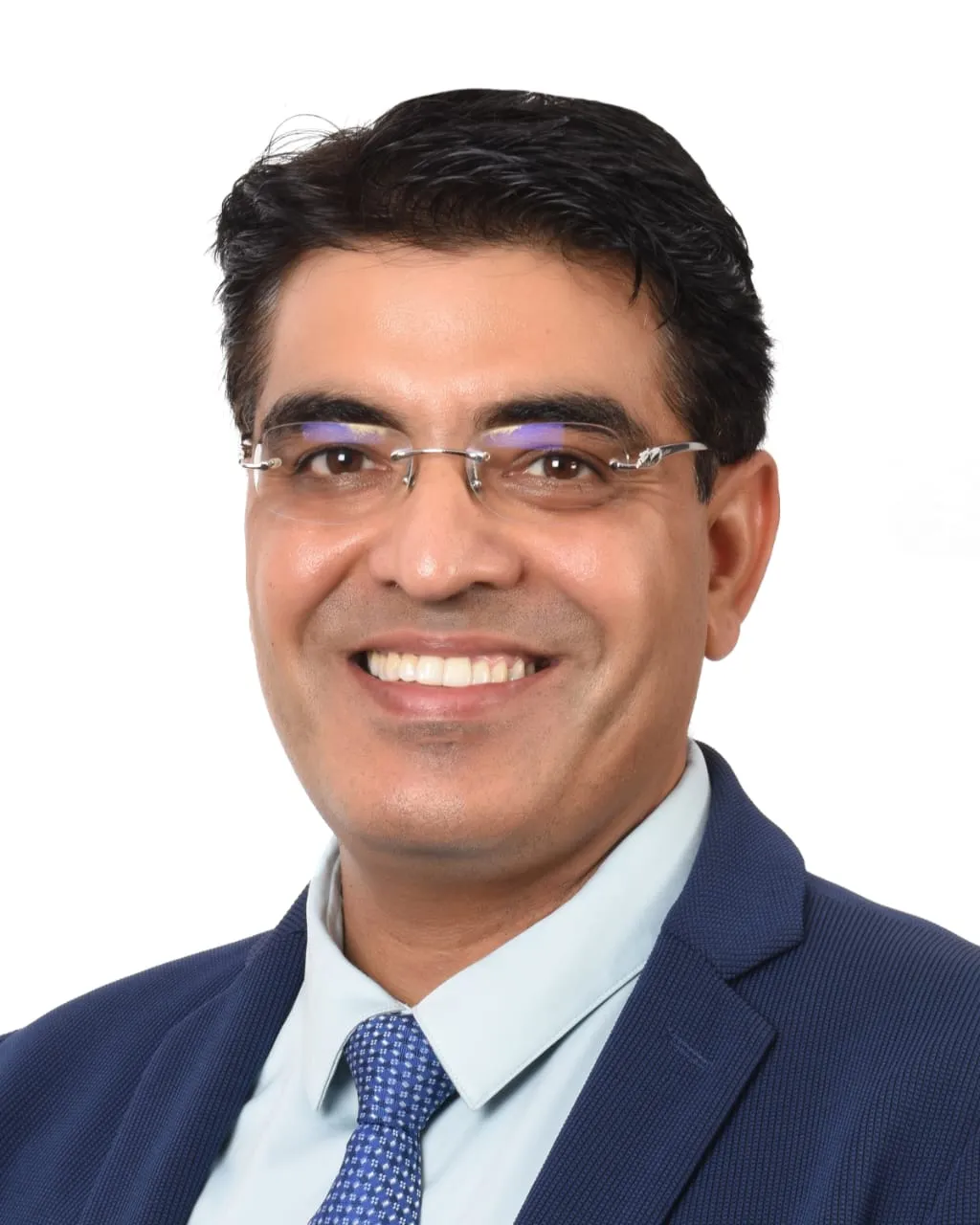
Pankaj Rana, Hisense India CEO.
Rana himself is refreshingly candid about the perception gap. "Many Indian consumers still think we are only a TV brand," he told me, "but globally we are strong across many categories and in product innovation." He added, with the earnestness of someone who has clearly rehearsed this particular sermon before: "In terms of technology, we are top-notch and want to bring that to Indian customers. We need media support so consumers understand what real Hisense is." The phrase "real Hisense" lingers. It suggests a company that believes its Indian incarnation has, until now, been a truncated, almost diminished version of itself. Globally, Hisense is formidable in refrigerators and small domestic appliances — categories it has not yet introduced in India. India has simply never witnessed the full arsenal. That is now changing, with deliberate and unmistakable theatricality. The Sri City factory, the AC launch, and the washing machine rollout constitute Hisense's way of laying its entire hand upon the table — and Rana, with the practised composure of someone who has watched this playbook triumph across dozens of other markets, is the man dealing.
What The Numbers Actually Reveal
The figures are bracing, even for an industry accustomed to ambitious proclamations. Hisense India closed calendar year 2024 with net revenue — stripped of GST and taxes — approaching $100 million, derived almost entirely from televisions. The Sri City facility, conjured into existence through a joint venture with Epack Durable's subsidiary Epack Manufacturing Technologies, has been erected with an investment exceeding $30 million and will commence mass production of room air conditioners this very month. Phase 1 boasts an installed annual capacity of 750,000 split AC units — a number that speaks not of tentative experimentation but of industrial-grade commitment. Phase 2, slated for Q2 of the current fiscal, introduces washing machines to the production line. Phase 3, in Q3, brings television manufacturing — the very backbone of the Hisense empire — emphatically in-house.
"This is part of a bigger goal," Rana told me, with the kind of measured gravitas that comes from having a global parent wielding $29 billion in annual revenue and factories sprawling across four continents. "Building manufacturing facilities for the Indian market." In his formal inauguration remarks, he was more expansive: "This plant enables us to deepen control over quality, cost, and supply chains, while creating a strong platform to scale operations and customise products for Indian consumers. It reinforces our intent to build a locally rooted, manufacturing-led organisation in India." The distinction between the two registers — the conversational candour and the podium polish — is itself revealing. Rana knows this factory is both an operational asset and a political statement, a tangible embodiment of Make in India credentials at a moment when the provenance of Chinese investment in India carries considerable diplomatic freight. The plant currently employs around 500 people. Hisense expects that figure to swell to 1,500 within two years — a workforce expansion that would, in itself, constitute a meaningful economic footprint in the Sri City Special Economic Zone.
It is worth pausing to appreciate what this facility supplants. Until now, Hisense India operated through an import-led and partner-supported model — televisions issued forth from contract manufacturers like Dixon Technologies and Bhagwati Products, while a modest AC pilot subsisted on third-party production. Sri City represents the decisive pivot to something altogether more vertically integrated, more commanding, more permanent. When Rana declares that the plant will eventually handle 100 per cent of Hisense India's room air conditioner output, that is not a gauzy aspiration; it is the stated manufacturing blueprint.
Why Air Conditioners, And Why Now
The strategic calculus is neither subtle nor difficult to decode. Rana frames it with a statistic that doubles as a provocation: "India's AC penetration is still in the single digits, compared to many developed markets where penetration is 40 to 50 per cent. So there is huge potential for the India AC business over the next 10 to 20 years. That is one of the primary reasons many consumer electronics brands are entering the AC business." The broader data corroborates his enthusiasm. India's air conditioner penetration languishes stubbornly in the range of 8 to 10 per cent — a figure that borders on the absurd when juxtaposed with roughly 80 per cent in China. With extreme heatwaves hardening into a grim annual certainty — 2024 visited upon the nation over 536 heatwave days, with Churu in Rajasthan touching an infernal 50.5°C — the structural demand thesis is not merely self-evident; it is practically screaming from the rooftops. The India AC market was valued at approximately $5.85 billion in 2025 and is forecast to swell at a compound annual rate exceeding 17 per cent through to 2031, according to TechSci Research. These are not incremental numbers. This is a market on the precipice of a generational expansion.
But it is not merely rising temperatures fuelling this conviction. "It's not only consumer demand," Rana observed. "Infrastructure is shaping up — new apartments, residences, commercial complexes, shopping malls — all require air conditioning." The demand signal, in other words, is emanating from both the household and the built environment simultaneously — a twin-engine growth story that few other appliance categories can claim.
Rana harbours no illusions about the ferocity of the competitive terrain. Voltas presides over the residential AC market with roughly 24 per cent share, trailed by Blue Star at 18 per cent and LG at 15 per cent. Daikin, Samsung, Panasonic, and Haier all maintain entrenched positions, fortified by years of channel depth and consumer recall. But Hisense possesses a card that many of these established adversaries simply cannot play. "We are the number-one brand in China and many markets for commercial air conditioning," Rana stated, with the quiet authority of someone citing incontrovertible fact. "Globally, we are usually among the top-five brands in AC exports." The company's inverter AC heritage runs particularly deep. "We were the first company in China to launch inverter air conditioners," Rana noted, a claim that carries substantial weight in a market increasingly obsessed with energy efficiency. "This is the ninth generation of inverter air conditioning that we are launching. Our technology, innovation, and R&D in ACs are very strong." When I asked whether Hisense can realistically carve out meaningful share in a market already teeming with entrenched incumbents, Rana was unequivocal: "Based on our product, quality, technology, and the new things we will introduce, we believe we can create a good space for ourselves in this growing market."
"In India, we are first working on room air conditioners," Rana said, selecting his words with the deliberation of someone who has manifestly been counselled on what not to disclose prematurely. "Soon — within six months to a year — you will see a big announcement from us about commercial air conditioning as well." The implication reverberates with unmistakable clarity: Hisense is not merely tiptoeing into the room AC segment. It is methodically constructing a full-spectrum air solutions edifice — splits, cassettes, tower units, VRF systems, industrial-grade HVAC — the kind of 360-degree dominion that companies like Daikin and Carrier have spent the better part of three decades assembling in India. Hisense intends to compress that timeline considerably.
When Rana was pressed on whether this constitutes a genuinely serious B2B play, not merely a consumer brand extension wearing an industrial hat. He demurred with characteristic diplomatic grace — "It would be inappropriate to comment in detail right now" — but then offered a formulation that revealed rather more than he perhaps intended: "We provide 360-degree air solutions: light commercial, VRF, HVAC, chillers — all coming into India in a phased manner, with a strong GTM plan so we don't make mistakes." He confirmed that Hisense already furnishes VRF and HVAC solutions to "a few prominent builders and malls" on Indian soil. The scale, he conceded with disarming candour, is modest today. The ambition is anything but.
The AC Portfolio At Launch
Phase 1 at Sri City will manufacture Hisense's flagship global AC lineup, encompassing the F-Series, Eco Series, Intelli Perla Series, and the forthcoming Intelli Pro Series. These are split air conditioners — the overwhelmingly dominant form factor in the Indian residential market, the appliance that has graduated from aspiration to near-necessity in metropolitan and tier-two India alike. Rana indicated that lighter commercial units — cassette and tower configurations — would follow in due course, preceding the eventual march into full commercial HVAC territory.
There is a propitious tailwind here that Rana is acutely attuned to. In September 2025, the GST Council enacted a consequential reduction in the tax rate on air conditioners from 28 per cent to 18 per cent — a 10-percentage-point liberation that immediately shaved an estimated Rs 1,500 to Rs 2,500 off retail prices per unit, depending on the model and tonnage. Rana confirmed that this fiscal reprieve generated a perceptible sales fillip, though he was equally forthright in noting that rising memory and component costs ( in context opf its core TV business) have since "taken much of that benefit back over the last two months." A small, surgical price increase was enacted in February, with more substantive hikes anticipated from March-April onwards. The dance between policy relief and input cost inflation is, as ever, an exquisitely delicate one.
Washing Machines And The Front-Load Gambit
Hisense's washing machine stratagem is, if anything, more surgically precise than its AC offensive. Rana observed — with the quiet relish of someone who has exhaustively mapped the competitive topography — that a mere three or four brands actively contend in India's front-load washing machine segment, a premium-value category where Hisense lays claim to genuine global product supremacy.
"When we introduce our range, we will start with front-load washing machines," he said. "It will take time, but it will happen soon." The factory expansion for washing machines is calendared for Q2 of this fiscal year. In a market where the semi-automatic twin-tub still commands enormous volumes, Hisense's decision to lead with the premium front-load proposition is a statement of intent that speaks volumes about where it wishes to position itself — not as a price warrior, but as a technology-led challenger with sophistication to spare.
Television Business Ramp Up
Hisense's television credentials are, by any objective measure, formidable on the global stage — even if Indian consumers remain blissfully oblivious to the brand's staggering reach. Omdia data for 2024 reveals that Hisense dispatched 29.14 million TV units into the world, capturing 14 per cent of the global market and securing the second position behind only Samsung. In the rarefied 100-inch-and-above segment — the cathedral of home entertainment, where televisions cease to be appliances and become architectural statements — Hisense commands a stupefying 56.7 per cent global share, according to Omdia's Q1 2025 figures, having maintained the number-one global position in this category for consecutive years from 2023 through to Q3 2025. Counterpoint Research noted earlier in 2025 that both Hisense and TCL have now surpassed LG in unit shipments, a tectonic reconfiguration of a hierarchy that once seemed immutable. Hisense styles itself, with some justification, as "the Origin of RGB MiniLED" — a claim to technological primogeniture in the display technology that is rapidly defining the premium end of the television market.
Rana's pride in the television portfolio is palpable, and unfeigned. "We proudly say our TVs are among the best in terms of picture quality: QLED, mini-LED, RGB mini-LED,” he said — though he concedes the terminology can get mixed, and seeing the product is the simplest way to understand the difference. But having spent time with Hisense's flagship displays at CES and also having reviewed some of its flagship products in India, I can attest that it is not hollow — the audio engineering on the higher-end sets, particularly those with integrated Devialet systems, is genuinely a cut above what most television manufacturers deliver.
In India, however, Hisense remains a challenger — talented, armed to the teeth with technology, but still seeking the audience its products deserve. The brand operates two TV marques — Hisense and Toshiba — and until mid-2024 was tethered almost exclusively to e-commerce distribution. The offline channel build, which commenced in earnest in the second half of 2024 with the recruitment of a dedicated sales force and the appointment of channel partners including Reliance and regional retail confederations across South and East India, is still in its nascent chapters.
This year, Rana promises nothing less than the full, unabridged force of Hisense's display technology arsenal. "We will bring all technologies — 4K, QLED, mini-LED, and even RGB mini-LED," he declared. "Starting April-May, we plan to introduce a complete lineup of RGB mini-LED in India." For the uninitiated, some context: Hisense's RGB mini-LED pantheon — including 116-inch and 100-inch flagships of extraordinary visual opulence — culminated in a CES 2026 Best of Innovation Award for the 163-inch RGBY MicroLED display, the industry's first four-primary colour architecture.
I walked the Hisense booth at LVCC's Central Hall earlier this year; alongside Dreametech, it was among the most imposing, most unapologetically spectacular presences on the entire show floor. The 116UXS, with its RGB MiniLED evo backlight system incorporating a cyan fourth primary, rendered images with the kind of chromatic fidelity that makes you reassess what you thought a television could do.
The challenge, as Rana acknowledges with pragmatic clarity, is that premium televisions commanding prices north of Rs 1,00,000 are fundamentally experiential purchases — customers want to witness the picture quality with their own eyes, feel the thrum of the audio, compare the abyssal depth of the blacks and the luminous precision of the backlighting. "Offline expansion is massive," he said. Rana acknowledged that once a TV hits a certain price point, the touch and feel offered by the physicality of the retail footprint becomes critical. This is precisely why the offline channel architecture is not merely a logistical convenience but an existential prerequisite for Hisense's premium television aspirations in India. You cannot sell a Rs 3,00,000 RGB mini-LED television through a product listing photograph. You sell it by letting the picture do the talking in a showroom where the ambient light conspires against it — and it still triumphs.
Tailwinds, Headwinds, And The Memory Cost Conundrum
Rana offered a compact but illuminating assessment of the macroeconomic firmament. The Union Budget, he observed, has proven broadly salutary for consumer durables. "The government has provided good incentives for component manufacturing in India," he said. "The consumer durable and electronics industry has taken the budget positively." But it was on the subject of trade architecture that he grew most animated. "India is planning FTAs with various countries; there is news about engagements with GCC countries and potential tariff reduction with the US," Rana noted. "These developments will give huge export opportunities for Indian manufacturers and brands." The Sri City plant, positioned within a Special Economic Zone, is architecturally designed to serve both domestic demand and international markets with equal facility — an export corridor that could prove transformative if the trade winds align.
But there exists a countervailing pressure that few in the industry are confronting publicly with sufficient candour: the relentless ascent of memory costs. Rana was unusually forthcoming on this point. "Now that TVs are smart and run operating systems with apps, advanced automation, and AI features, memory requirements — and thus memory costs — matter," he explained. Memory is a critical input not merely for smartphones and laptops but increasingly for smart televisions, and the cost trajectory is punishing. "Rising memory costs have taken much of the GST benefit back over the last two months," he conceded, with the matter-of-fact tone of someone describing a weather pattern rather than a margin squeeze. He anticipates no meaningful price stabilisation before June at the earliest, "maybe from July onwards — although I don't expect stabilisation before June." Hisense enacted a "very small, marginal increase" in prices in February, with more consequential adjustments on the horizon. "From March-April onward, we will start increasing prices more noticeably," Rana confirmed. It is, in essence, the eternal pas de deux of Indian consumer electronics: policy giveth, and input costs taketh away.
Data Localisation
On the politically freighted question of data localisation — a matter of particular sensitivity given that Hisense operates its own proprietary operating system, VIDAA, on its smart televisions — Rana was categorical. "Everything is localised for us. Whenever we store any kind of data, it is stored on servers or cloud backup systems in India. From day one we have followed compliance requirements." In a regulatory climate where the provenance of data storage can determine a brand's social licence to operate, this is not a peripheral detail. It is foundational.
Marketing Plans For India
Do not expect a saturation advertising blitzkrieg from Hisense this year. Rana's marketing philosophy is refreshingly disciplined, almost monastic in its restraint: erect the channel infrastructure, broaden the product portfolio, and only then unleash the full-throated promotional offensive. "This year, our focus offline will be to create interactions with end customers — TV walls, podiums, more sales promoters, below-the-line activities," he said. The heavier ordnance — newspaper campaigns, outdoor spectaculars, cinema and television advertising timed to the rhythms of cricket season — is being held in judicious reserve for next year, when Hisense expects to field at least three product categories with a mature, battle-tested retail channel beneath them. "Once our channel is ready and we have at least three products — TV, AC, washing machine — next year we will ramp up above-the-line marketing: newspaper ads, outdoor, cinema, or TV ads, for example during cricket," Rana elaborated, sketching a promotional architecture that is unmistakably designed around India's sporting and festive calendar.
The chronology is deliberate and reveals a shrewd reading of the Indian cultural calendar. The ICC Champions Trophy 50-over World Cup is anticipated around September-October, with Diwali arriving in November — the twin peaks of Indian consumer spending. "By Diwali we should be ready, in my opinion," Rana said, with the washing machine factory at Sri City expected to be fully commissioned by then. As the official sponsor of the FIFA World Cup 2026, Hisense already commands a global sports marketing platform of enviable reach; deploying it with surgical precision in cricket-besotted India during a major tournament cycle would be the logical, and potentially transformative, next act.
The Epack Alliance And What It Portends
The choice of manufacturing partner warrants closer scrutiny, for it reveals as much about Hisense's India strategy as any product launch. Epack Durable is India's second-largest original design manufacturer of room air conditioners, maintaining established production relationships with Daikin, Voltas, Panasonic, Haier, and Blue Star — which is to say, with virtually every consequential player in the Indian AC firmament. Its subsidiary, Epack Manufacturing Technologies, has constructed the Sri City facility within Epack's own industrial park, where it also operates an existing ODM plant. Reports from late 2024 indicated that Hisense was in advanced discussions to acquire up to 26 per cent equity in the Epack subsidiary — a manoeuvre that, if consummated, would elevate the collaboration from contract manufacturing into a genuine technology-sharing joint venture with far deeper strategic sinews.
Ajay Singhania, MD and CEO of Epack Durable, struck a complementary note at the inauguration: "We at Epack Durable are proud to have partnered with Hisense India on its first manufacturing venture in India. This facility is a strong embodiment of the collaboration between Hisense's technology and Epack Durable's technical expertise in consumer durables. Adhering to global manufacturing standards, this facility will showcase India's production capabilities and strengthen the country's position as a preferred partner for global companies planning long-term expansion." For Hisense, the arrangement possesses an architectural elegance: it secures a local manufacturing footprint, supply chain intelligence, and a viable path to cost competitiveness — all without navigating the labyrinthine regulatory and political sensitivities of establishing a wholly-owned Chinese factory on Indian soil. It is, in the argot of corporate strategy, a textbook asset-light entry with optionality for deeper integration.
What I Am Watching
Hisense's India narrative is, at this juncture, a supremely credible wager rather than a validated thesis. The $100 million net revenue figure from 2024, while commendable for a brand that has been meaningfully present for scarcely three years, is dwarfed by the entrenched consumer durables titans it proposes to challenge. The offline channel remains embryonic. The air conditioner and washing machine businesses have yet to generate material revenue. And the Indian consumer durables market, for all its intoxicating structural promise, possesses a well-documented and rather pitiless habit of punishing overextension while rewarding only the most patient, channel-deep, culturally attuned execution.
Rana is aware that even the three-category rollout under way is merely the opening movement. "We are positioning Hisense in India as a multi-category brand, not only a TV company," he said. "Globally we're very strong in refrigerators and small domestic appliances, but we don't yet have all those products in India." The implication is transparent: refrigerators and small appliances will follow, in time, further expanding the beachhead. The question is not whether Hisense has the product depth to become a full-spectrum consumer durables brand in India — it manifestly does. The question is whether it can build the channel architecture, the consumer recall, and the after-sales trust that this market demands, at the pace it has set for itself.
But the constituent elements are now assembled with purposeful clarity: a dedicated factory with export capability, a phased multi-category deployment, a global technology portfolio that is ferociously competitive at the premium frontier, and a CEO who has navigated these waters before and who appears to comprehend — at a molecular level — that entering India is seductively easy but sustaining positioning is an altogether more exacting enterprise. Rana articulated this himself with disarming precision. "It's easy to enter India, but difficult to maintain positioning. We want a strong GTM plan so we don't make mistakes."
The next twelve months will determine whether Hisense India is destined to be a footnote or a formidable new protagonist in this market's unfolding drama. I intend to watch — with considerable interest and, I confess, a measure of anticipation — very closely indeed.
Core Details
Parameter
| Detail
| Manufacturing facility
| Sri City, Andhra Pradesh (10-acre campus)
| JV partner
| Epack Manufacturing Technologies (subsidiary of Epack Durable)
| Investment
| >$30 million (~Rs 272 crore)
| Phase 1 (Feb 2026)
| Room air conditioners — 750,000 units/year capacity
| Phase 2 (Q2 FY26)
| Washing machines (top-load and front-load)
| Phase 3 (Q3 FY26)
| LED televisions (4K, QLED, mini-LED, RGB mini-LED)
| FY24 India revenue
| Close to $100 million net (predominantly televisions)
| Brands in India
| Hisense and Toshiba (televisions)
| AC lineup at launch
| F-Series, Eco Series, Intelli Perla Series, Intelli Pro Series
| Offline partners
| Reliance, regional retail chains (South and East India)
| Global TV share
| 14 per cent (No. 2 worldwide by shipments, Omdia 2024)
| 100-inch+ TV share
| 56.7 per cent global (Omdia Q1 2025)
| India availability
| ACs: February 2026; Washing machines: H1 FY27; TVs (local manufacture): H2 FY27
|
|





